
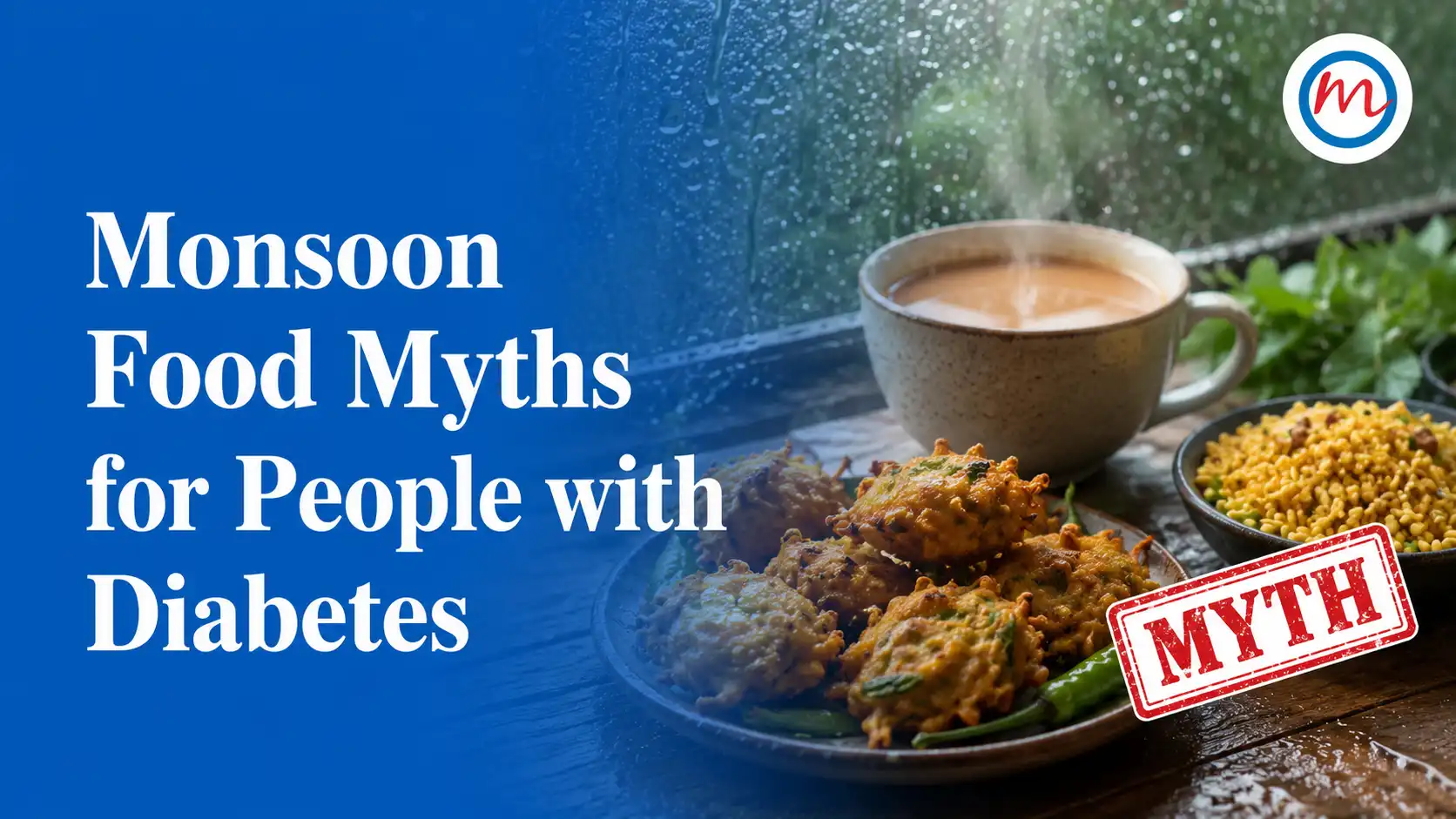
Monsoon Food Myths Diabetes: What Is True and What Is Not
The monsoon food myths diabetes patients encounter every rainy season can be just as dangerous as the wrong foods themselves. The arrival of the monsoon season brings a welcome relief from the scorching summer heat. Along with the cool breeze and rainy days come intense cravings for hot, comforting snacks like pakoras, samosas, and endless cups of steaming tea or coffee.
For individuals living with diabetes, navigating these seasonal cravings can be incredibly tricky. The internet and well-meaning relatives often flood you with contradictory dietary advice during the rainy season. Believing these common monsoon food myths diabetes sufferers hear repeatedly can lead to severe blood sugar fluctuations, digestive issues, and weakened immunity. Let us separate fact from fiction so you can enjoy the rains safely while keeping your diabetes under absolute control.
Debunking Common Monsoon Food Myths Diabetes Patients Believe
Myth 1: People with diabetes should avoid all fruits during the monsoon.
The Reality: Many people believe that seasonal monsoon fruits like jamun, pears, plums, and cherries are either too sugary or carry infections during the rains. This is one of the most widespread monsoon food myths diabetes patients are told, and it is entirely false. Fruits like jamun contain a compound called jamboline, which helps prevent starch from converting into glucose, making it highly beneficial for sugar control.
The Fact: You do not need to avoid fruits. Eat them whole (not as juices) in small, controlled portions as an evening snack. Always wash them thoroughly under running water to eliminate environmental bacteria.
Myth 2: Hot, strong tea or coffee helps lower or control blood sugar.
The Reality: There is a common belief that sipping hot, bitter, or herbal tea throughout a rainy day naturally burns off glucose. While unsweetened black tea or green tea contains antioxidants, it is not a medicine or a treatment for diabetes.
The Fact: Drinking multiple cups of tea, especially if it contains milk and refined sugar, will cause your glucose levels to skyrocket. Excess caffeine can also cause dehydration, which makes your blood sugar levels look artificially high on your glucometer. This is among the most dangerous monsoon food myths diabetes communities repeat during the rainy season.
Myth 3: Fried snacks are perfectly safe because they are savory, not sweet.
The Reality: When it rains, the automatic instinct is to reach for fried snacks like samosas, pakoras, or bhajjis. Many people assume that because these foods do not contain visible white sugar, they will not impact diabetes.
The Fact: These items are made of refined carbohydrates (maida or excessive gram flour) and are deep-fried in industrial seed oils. This combination causes a violent post-meal blood sugar surge and severely worsens insulin resistance, making your HbA1c levels much harder to manage over the following days. Believing this myth is one of the costliest monsoon food myths diabetes patients act on.
Myth 4: Warm soups are always a healthy, safe option for rainy nights.
The Reality: On a cold, rainy evening, a bowl of hot soup feels like the ultimate healthy dinner substitute. However, not all soups are created equal.
The Fact: Packaged, instant, or restaurant-made cream soups are heavily thickened with cornstarch, potato starch, or refined flour. They are also packed with sodium and chemical preservatives. If you want soup, make a fresh, clear vegetable broth or lentil soup at home, packed with real vegetables and lean proteins like shredded chicken or paneer blocks.
Myth 5: The rainy weather reduces your body’s daily need for exercise.
The Reality: When it is pouring outside, it is easy to excuse yourself from your daily walk and stay curled up on the couch. Many believe that cooler weather naturally speeds up your metabolism, reducing the need for physical movement.
The Fact: Staying sedentary during the monsoon while consuming heavier comfort foods is a direct recipe for metabolic disaster. Physical activity must remain a non-negotiable, year-round habit. According to the American Diabetes Association, regular movement is one of the most effective tools for helping your muscles absorb excess glucose from your blood, regardless of season.
Practical Rules for Healthy Monsoon Eating
To protect both your digestive system and your metabolic health during the rainy season, implement these simple lifestyle guidelines. These rules work alongside debunking monsoon food myths diabetes patients commonly act on:
- Emphasize Freshly Cooked Whole Foods: The damp monsoon air increases the rate of bacterial and fungal growth. Avoid eating raw salads from outside vendors, pre-cut fruits, or cold street food. Stick to piping hot, freshly cooked homemade meals.
- Track Your Hydration: Because you sweat less when the weather cools down, your natural urge to drink water drops. Dehydration causes the volume of blood to decrease, making the concentration of sugar in your blood much higher. Keep a water bottle close and aim for at least 2.5 liters of clean, filtered water daily.
- Smart Comfort-Food Swaps: If you crave a warm, crunchy snack on a rainy afternoon, skip the fried items. Opt for dry-roasted makhana (fox nuts), roasted chana, a small bowl of steamed sprouts chaat, or a baked or air-fried millet cutlet.
- The Post-Meal Balance: Never compromise on your post-meal movement. If it is raining too heavily for an outdoor walk, engage in 15 minutes of indoor exercise snacks such as walking up and down your house stairs, pacing down your hallway, or doing light spot-jogging.
Managing diabetes during the monsoon does not mean you have to deprive yourself of all seasonal joys. It simply requires you to replace refined, deep-fried foods with fiber-rich, protein-packed homemade alternatives. By ignoring common monsoon food myths diabetes communities spread and focusing on portion control, meal timing, and proper hydration, you can enjoy a vibrant, healthy, and safe rainy season. The World Health Organization confirms that informed dietary choices remain the single most sustainable strategy for long-term blood glucose control.
Frequently Asked Questions (FAQs)
Which monsoon fruits are safest for a person with diabetes?
Fruits like jamun, plums, pears, peaches, and papayas are excellent choices. They have a low-to-medium glycemic index and are packed with vitamins and antioxidants that boost your immunity against seasonal infections. Always practice portion control. Avoiding fruit entirely is one of the most unnecessary monsoon food myths diabetes patients follow.
Why do my blood sugar levels seem to rise more during the rainy season?
Shorter days, cold weather, and increased sedentary time can alter your metabolism. Additionally, giving in to cravings for fried snacks or drinking fewer liquids can cause significant, unexpected sugar spikes. Acting on monsoon food myths diabetes advice often makes this problem worse.
Can I drink herbal or ginger tea safely when it rains?
Yes, but ensure it is prepared without white sugar, jaggery, or honey. Adding natural ginger, tulsi, or a pinch of cinnamon can add flavor and help soothe your respiratory tract without affecting your glucose levels.
How can I safely exercise indoors when it is pouring outside?
You do not need an outdoor track. You can easily maintain your fitness by performing 20 to 30 minutes of indoor activities like yoga, bodyweight lunges, stretching routines, spot-walking while watching television, or climbing the stairs inside your house. Skipping exercise entirely because of rain is one of the most damaging monsoon food myths diabetes patients accept without question.
Don’t Let the Monsoon Disrupt Your Sugar Control!
Are your morning fasting sugar numbers fluctuating unpredictably with the changing weather? Get expert, personalized nutrition advice and structured lifestyle support from the leading diabetologists at Dr. Mohan’s Diabetes Specialities Centre. Learn how to balance seasonal cravings with precise, scientific care to safeguard your long-term wellness.
Book your consultation today for expert guidance!