
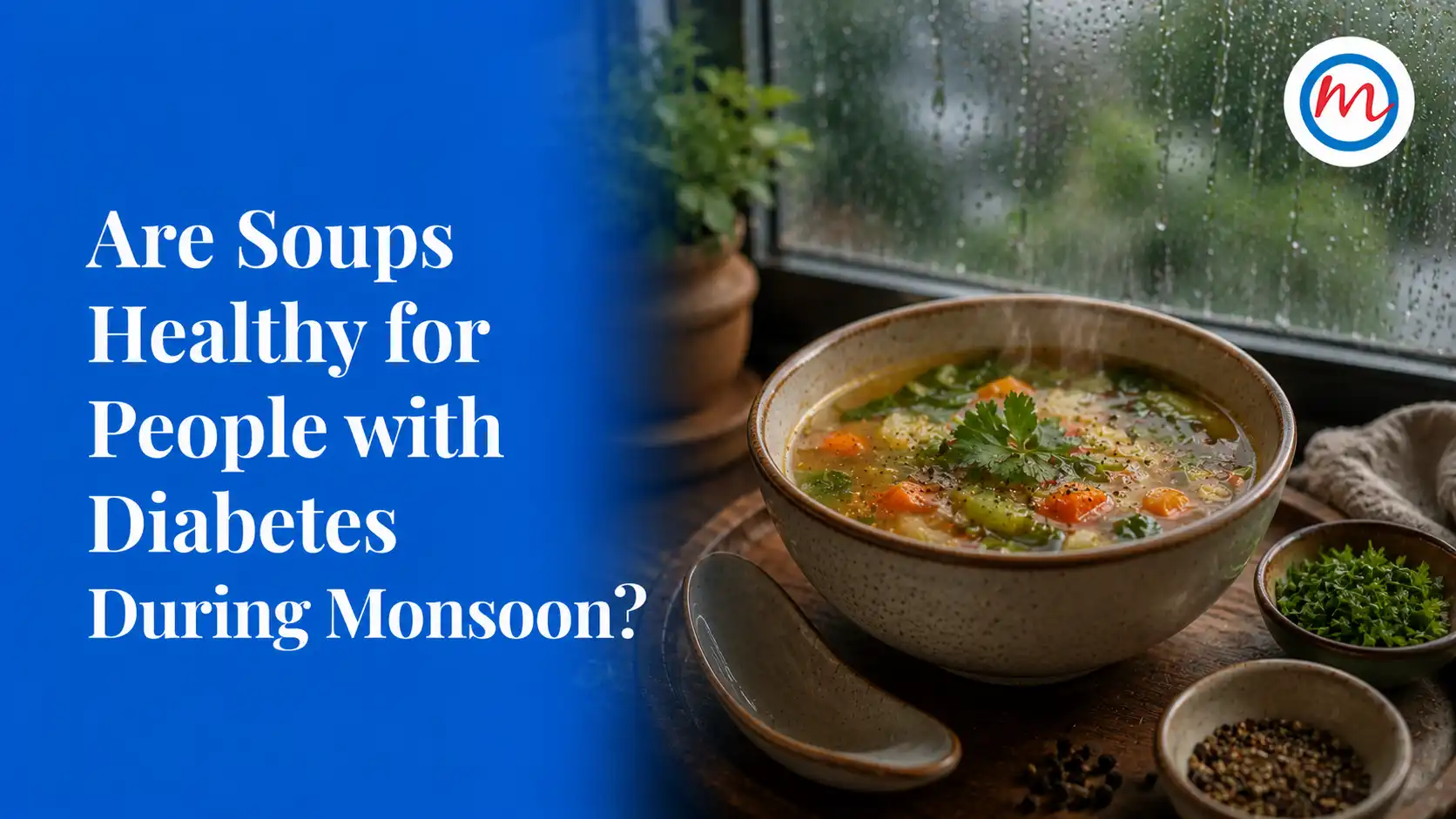
Soups for Diabetes: Are They Healthy During Monsoon?
Soups for diabetes can be either a powerful metabolic ally or a surprising blood sugar trap, depending entirely on how they are prepared. When it is pouring outside and the evening air turns chilly, a hot bowl of soup feels like the ultimate comfort food. It warms you up instantly and is universally praised as a healthy, wholesome choice.
However, if you are living with diabetes, the answer to “Are soups healthy?” is not a simple yes or no. While a freshly made, fiber-rich broth can be an excellent addition to your routine, certain types of soups, especially restaurant varieties and instant packets, can cause unexpected spikes in your blood sugar. Let us break down the metabolic benefits of soups for diabetes, identify which varieties to choose or avoid, and look at how to prepare a diabetes-friendly bowl at home.
The Metabolic Benefits of Soups for Diabetes During Monsoon
When prepared with the right ingredients, soups for diabetes offer fantastic advantages for managing blood glucose during the rainy season:
- Excellent Hydration: People tend to drink less water during the monsoon because it is cooler, which can lead to mild dehydration. Dehydration concentrates the sugar in your bloodstream, making your glucose readings look deceptively high. A liquid-based soup is a great way to boost your daily fluid intake.
- Natural Satiety and Volume: Soups have a high water volume combined with fiber, which stretches the stomach lining and signals your brain that you are full. Enjoying a healthy soup before dinner prevents you from overeating heavier, carb-dense foods later in the meal.
- Easy Vegetable Intake: Getting enough dietary fiber is crucial for slowing down glucose absorption. Soups for diabetes allow you to easily consume a large variety of blood-sugar-friendly vegetables, such as spinach, cabbage, carrots, and broccoli, in a single serving.
Best Soups for Diabetes vs. Soups to Limit
Not all soups for diabetes are created equal. To protect your glycemic index, you must be able to distinguish between a nutrient-dense broth and a hidden carbohydrate trap. According to the American Diabetes Association, choosing high-fiber, low-glycemic ingredients is the cornerstone of building diabetes-safe meals.
Best Soups for Diabetes (Prioritize These)
- Sugar-Free Tomato Soup: A classic choice among soups for diabetes, but only when made at home without added sugars or heavy cream. Tomatoes are low in carbohydrates and rich in lycopene, an antioxidant that supports heart health.
- Clear Vegetable Broth: Packed with water-soluble vitamins and fiber. Keep the vegetables slightly crunchy to ensure the fiber remains intact, which slows down digestion.
- Mushroom Soup: Mushrooms have an incredibly low glycemic index and add a savory flavor profile. When prepared with low-fat milk or a clear broth base, it is an excellent option.
- Lentil or Moong Dal Soup: Among the best soups for diabetes, legume-based broths add a powerful punch of plant-based protein and soluble fiber, creating a highly stable, flat blood sugar response.
Soups to Limit or Avoid
- Cream-Based Soups: Cream of tomato, cream of mushroom, or chowders rely heavily on full-fat cream, butter, and refined flour (maida) to achieve their thick texture. This combination increases insulin resistance and elevates calories, making them poor choices for diabetes management.
- Instant Soup Packets: Packaged, powdered soups are highly processed and rely on cornstarch, potato starch, and maltodextrin as thickeners. They also contain massive amounts of sodium to extend shelf life, which can negatively affect your blood pressure.
How to Make Soups for Diabetes at Home
Transforming a standard soup recipe into a blood-sugar-safe meal comes down to a few simple ingredient swaps:
- Ditch the Starchy Thickeners: Never use cornstarch, white flour, or arrowroot powder to thicken your soups. If you want a thicker texture, blend a portion of your cooked vegetables or lentils back into the broth, or add a splash of low-fat milk. This is the single most important rule for safe home preparation.
- Pump Up the Protein: Protein is essential for preventing blood sugar spikes. Always drop a source of lean protein into your bowl, such as cubes of low-fat paneer, tofu, boiled sprouts, or shredded chicken breast.
- Watch the Sodium: Keep table salt to a minimum. Instead, build rich, comforting flavors using natural aromatics and spices like freshly crushed black pepper, ginger, garlic, celery, and a squeeze of fresh lemon juice. Ginger and garlic are also excellent for boosting your immune system during flu season.
The World Health Organization emphasizes that a diet rich in vegetables, legumes, and whole foods remains one of the most effective strategies for long-term blood glucose management. All of these principles apply directly when building a bowl that is both safe and satisfying.
Frequently Asked Questions (FAQs)
Can I use corn kernels in my vegetable soup if I have diabetes?
Yes, but treat corn as a carbohydrate rather than a vegetable. You can add a small handful (around 2 tablespoons) of fresh corn kernels to your soup for texture, but avoid thick, blended sweet corn soups, which contain a much higher glycemic load per bowl. When used sparingly, corn works well in a diabetic-friendly bowl.
Is restaurant-made soup safe to consume?
You should approach restaurant soups with caution. To make soups taste richer, commercial kitchens almost universally use hidden sugar, high amounts of sodium, monosodium glutamate (MSG), and large quantities of cornstarch for thickening. Home-prepared soups are always the safer and more controllable option. Always ask for clear, un-thickened broths with the sauce or dressing on the side.
Can a bowl of soup replace a full dinner for a person with diabetes?
A clear vegetable soup alone does not provide enough protein or long-term energy to replace a meal, which might lead to midnight hunger pangs or nighttime hypoglycemia (low blood sugar). However, if you make a hearty soup containing lentils, paneer, or chicken along with plenty of vegetables, these hearty bowls can absolutely serve as a complete, light monsoon dinner.
Why does my blood sugar spike after drinking home-made tomato soup?
This usually happens because many traditional home recipes call for a teaspoon of sugar or jaggery to balance the natural acidity of the tomatoes. Additionally, straining the soup removes the beneficial vegetable fiber, leaving behind a liquid that digests very quickly. To keep your homemade soup truly blood-sugar-safe, avoid straining and skip the added sweeteners entirely.
Keep Your Blood Sugar Numbers Steady This Rainy Season!
Monsoon dietary adjustments do not have to be confusing. If you want to understand how different foods, including the soups you choose, impact your unique metabolism, get a personalized dietary roadmap from the expert medical team at Dr. Mohan’s Diabetes Specialities Centre. Receive scientific, structured care to balance seasonal comfort foods with excellent clinical outcomes.
Book your lifestyle and diabetes consultation today!