
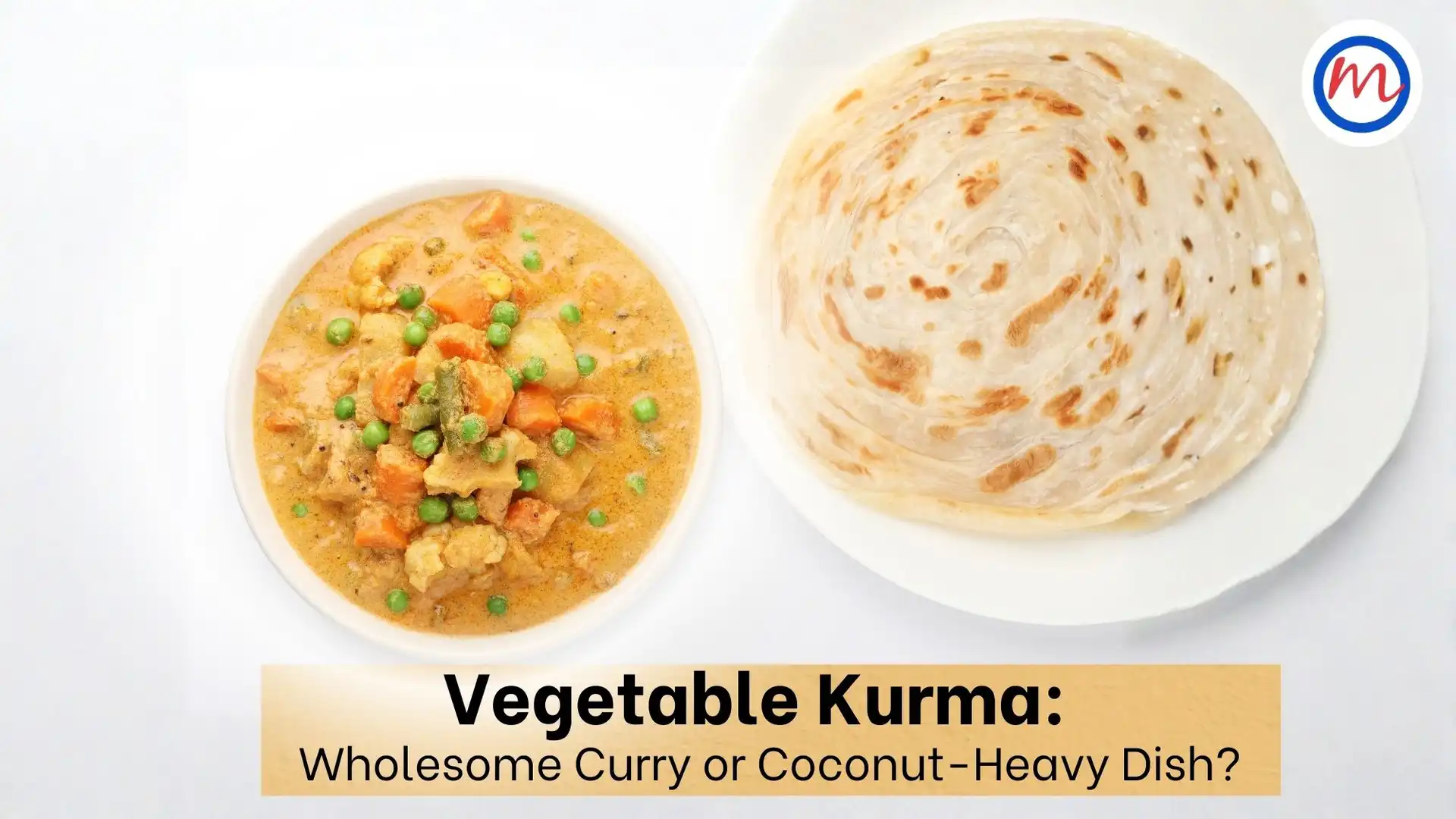
Vegetable Kurma: Wholesome Curry or Coconut-Heavy Dish?
Is Vegetable Kurma Really Wholesome?
Vegetable kurma is a South Indian favourite known for its rich aroma, creamy texture, and colourful medley of vegetables. But when we look closer at calories, the picture becomes more complex. While the dish sounds healthy because it contains carrots, beans, peas, and potatoes, the preparation style drastically changes its nutrition profile. The generous use of coconut, cashews, and oil can significantly increase overall calories and saturated fat.
How Coconut Affects Vegetable Kurma Calories
Coconut is the heart of traditional kurma — grated, ground, or as coconut milk. Though coconut offers healthy fats and fibre, it is calorie-dense. Just half a cup of grated coconut can add 200–250 calories to the curry. When you calculate calories for a typical hotel-style serving, it often ranges between 280–350 calories per cup. This makes it higher in calories compared to lighter curries like sambar or poriyal. Individuals trying to manage weight, cholesterol, or diabetes may need to pay attention to portion size.
Is It Still a Wholesome Choice?
Despite the higher calories, the dish has nutritional strengths: antioxidants from vegetables, vitamins A and C, potassium, and gut-friendly fibre. What matters is how you prepare it. Home-style kurma with less coconut, minimal oil, and more vegetables can be a balanced part of a meal. In contrast, restaurant kurma tends to be richer and heavier, especially when paired with parotta or chapathi.
How to Make it Healthier
To reduce calories, you can make small but effective changes:
• Use half the usual coconut and replace the rest with thickened milk or melon seeds.
• Increase the vegetable quantity.
• Keep oil to a minimum.
• Pair kurma with idli, dosa, or phulka instead of parotta.
A lighter version of kurma can indeed be wholesome — but only when prepared with mindful choices.
Vegetable kurma is the star of many South Indian breakfasts.
It smells delicious, looks colourful, and pairs with almost anything — idly, dosa, chapathi, parotta, or even biriyani.
But behind all that creamy richness lies a simple question:
Is vegetable kurma really a nutritious curry… or just a coconut-heavy dish in disguise?
Let’s unpack the truth.
Why Vegetable Kurma Sounds Like a Wholesome Choice
- Packed with vegetables
Carrot, beans, peas, cauliflower, potato — all add fibre, vitamins, minerals and colour.
- Spices that help digestion
Fennel, cinnamon, cloves, green chillies and ginger aid digestion and improve metabolism.
- It’s naturally filling
Because it combines vegetables + spices + a thick base, it keeps you full for longer.
On paper, kurma sounds like a perfect balanced curry.
Where Vegetable Kurma Turns Coconut-Heavy
- Too much coconut grinding
Most kurma recipes use ½ to 1 cup of grated coconut for a single dish.
Coconut is healthy but calorie-dense.
- Cashew or poppy seed add-ons
Restaurants add cashews to make the gravy thick and creamy — doubling the calorie load.
- Oil-rich tempering
A generous drizzle of oil or ghee is often added at the end for aroma.
- Large portion temptation
Because kurma tastes rich and comforting, people eat more than they realise.
So yes, kurma can easily shift from “wholesome” to “heavy” very quickly.
How to Make Vegetable Kurma Healthier
- Reduce coconut
Use just 2 tablespoons, not ½ cup. - Increase dal proportion in the base
Add 2 tablespoons of cooked moong dal or masoor dal while grinding — gives thickness + protein. - Add more vegetables
Double the quantity of vegetables to increase volume and fibre. - Use minimal oil
1 teaspoon is enough for tempering. - Use curd or thin coconut milk
These give a creamy texture without extra fat.
Healthy Vegetable Kurma Recipe (Improved Version)
Ingredients
- Mixed vegetables – 2 cups
- Onion – 1
- Tomato – 1
- Oil – 1 teaspoon
- Curry leaves
To Grind:
- Coconut – 2 tablespoons
- Moong dal (cooked) – 2 tablespoons
- Fennel seeds – ½ teaspoon
- Green chilli – 1
- Ginger – small piece
- Garlic – 2 cloves
Method
- Sauté onion and tomato in 1 teaspoon oil.
- Add vegetables and cook until soft.
- Grind the base ingredients smoothly.
- Add the paste to vegetables, adjust water, and simmer.
- Finish with curry leaves.
Approximate Nutritive Value (Per Serving)
- Calories: ~190 kcal
- Carbohydrates: 20 g
- Protein: 5 g
- Fat: 8 g
- Fibre: 4 g
To know more: https://drmohans.com/
Click to book an appointment:https://drmohansdiabetes.co.in/enroll/?campname=website