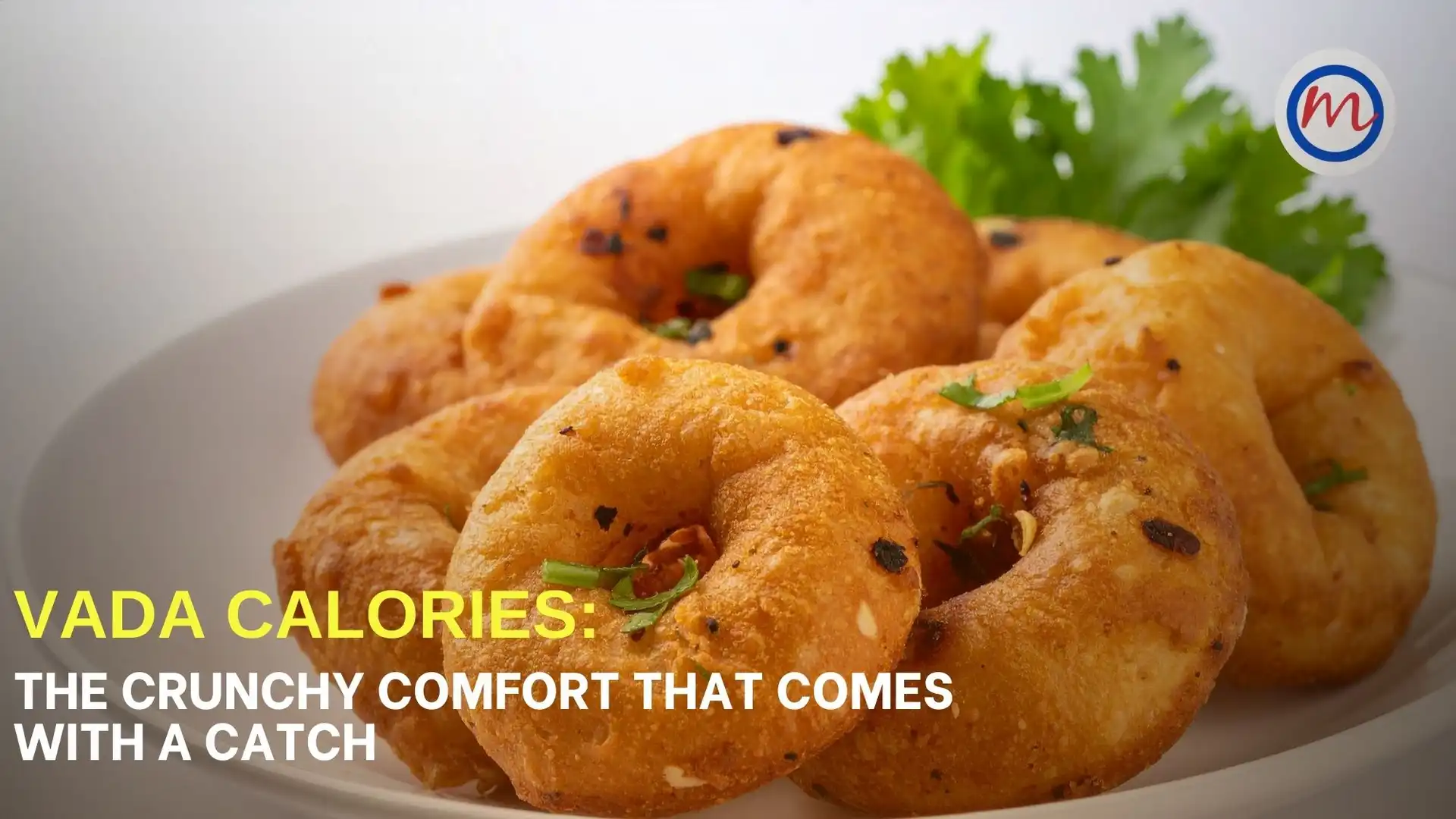
Vada Calories: The Crunchy Comfort That Comes with a Catch
Vada — crisp, golden, and perfectly round — is the pride of South Indian tiffin counters. Whether it’s dipped in sambhar or paired with coconut chutney, few can resist its charm. But beneath that satisfying crunch lies a story of oil, calories, and changing traditions.
Traditionally, vada was made using whole urad dal- soaked, ground fresh, and deep-fried in clean oil. The fermentation from soaking gave it a mild probiotic effect, and the lentils added good-quality protein. It was a weekend treat or temple prasad — not an everyday breakfast item.
Today, however, vadas are often made with processed dal paste and reused oil, and fried in bulk for convenience. This not only increases the fat content but also affects nutrient quality. A single medu vada can deliver nearly 150–180 kcal, mostly from fat — and let’s be honest, no one stops at one!
Make Your Vada a Little Wiser
If you love your vada, give it a protein boost and a healthy twist:
- Increase dal proportion (add 1 tablespoon of green gram or soya flour for extra protein).
- Add finely chopped vegetables like carrots, onions, or spinach for fibre.
- Try pan frying or air-frying instead of deep-frying.
- Use fresh oil every time to avoid formation of harmful trans fats.
Nutritive Value (per medium vada, approx.)
- Energy: 160 kcal
- Carbohydrates: 14 g
- Protein: 6 g
- Fat: 9 g
- Fibre: 2 g
So, while the vada might look appetizing, remember — it’s a crunchy comfort food that needs a little modern-day mindfulness. Make it smarter, and your taste buds (and heart) will thank you!
Understanding Vada Calories in Traditional vs. Modern Kitchens
When we compare traditional preparation methods to today’s fast-paced cooking styles, the difference in vada calories becomes very clear. Earlier, households prepared vada with patience — soaking the urad dal for hours, grinding it using a stone grinder, and frying it in small batches using fresh oil. This meant better flavour, better digestion, and lower fat absorption.
However, in many modern eateries, shortcuts have replaced careful cooking. Pre-ground dal batter, aeration agents, and industrial frying practices make the texture crispy, but they also increase oil absorption. This is where vada calories shoot up, making even a single piece pretty energy-dense.
Another factor is portion size. Traditional vadas were smaller, often the size of a lemon. Today’s vadas are almost twice as big, which means the vada calories can easily double without you realising it. When individuals pair it with toppings, additional chutney refills, and ghee-fried flavourings, the total calorie load becomes even higher.
Why Vada Calories Matter for Everyday Eating
For people looking to manage weight, blood sugar, or cholesterol, understanding vada calories is essential. A medium vada may have around 160 kcal, but larger hotel-style vadas can reach 200–220 kcal. Combine two vadas with a bowl of sambhar and chutney, and the meal can cross 500 kcal — equal to a lunch-sized portion.
The fat quality also matters. When oil is reheated repeatedly, harmful compounds like aldehydes and trans fats are formed. These compounds can increase inflammation, affect lipid levels, and contribute to long-term heart risks. This means that vada calories are not just about energy — they can also reflect the quality of fat you’re consuming.
A Smarter Way to Enjoy Vada Without the Calorie Shock
Fortunately, enjoying vada without guilt is possible. By altering just a few steps at home, you can significantly reduce vada calories while retaining its iconic taste. Using a combination of dals, adding fibre-rich vegetables, and controlling the frying temperature can help minimise oil absorption.
Air-frying and pan-frying can further reduce total fat content by up to 40–60%. Another helpful trick is shaping smaller vadas, which lowers both portion size and total vada calories without altering the eating experience.
The Bottom Line: Balance the Crunch with Awareness
Vada will always remain a beloved part of South Indian cuisine. The goal is not to eliminate it but to understand vada calories and enjoy it mindfully. With smart preparation and sensible portions, this crunchy classic can stay in your menu without weighing down your health goals.
To know more: Visit: https://drmohans.com/
Click to book an appointment: https://drmohansdiabetes.co.in/enroll/?campname=website