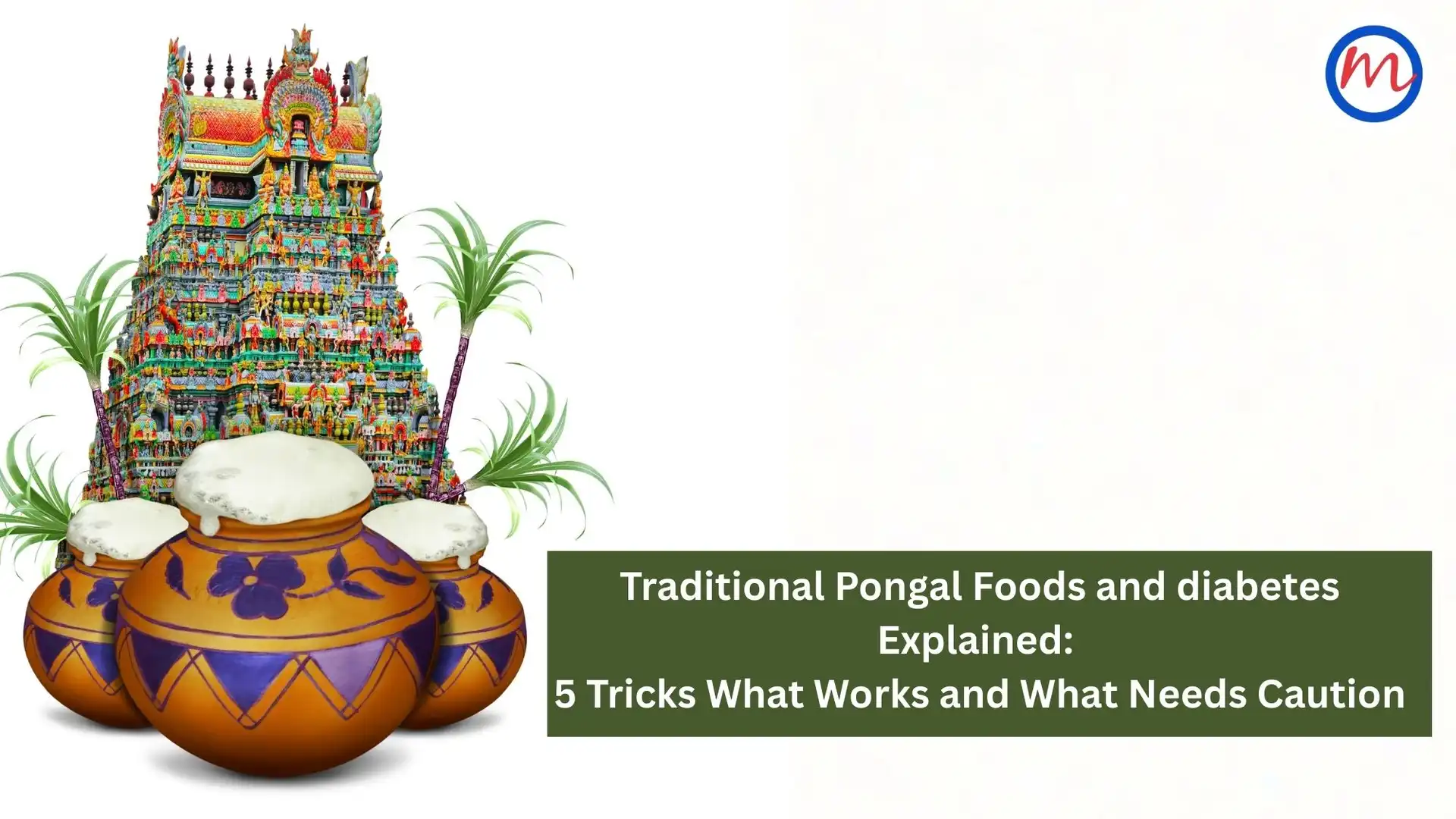
Traditional Pongal Foods and diabetes Explained: 5 Tricks What Works and What Needs Caution
Pongal is a festival deeply rooted in tradition, seasonal eating, and gratitude for nature’s harvest. The foods prepared during Pongal are simple, home-cooked and largely unprocessed. While this is a positive from a health perspective, people living with diabetes need to understand how these traditional foods affect blood sugar levels. Understanding traditional Pongal foods and diabetes helps people make festive choices that protect blood sugar while respecting cultural food practices.
Knowing what works, what needs moderation and how to combine foods wisely can make festive eating both enjoyable and safe.
Traditional Pongal Foods and Diabetes:
Rice: The Base of Most Pongal Dishes
Rice is the foundation of many Pongal dishes, including ven Pongal and sweet Pongal. White rice is quickly digested and can raise blood sugar levels rapidly. let us understand the traditional Pongal foods and diabetes.
What works
- Small portions of rice combined with lentils and vegetables
- Eating rice as part of a balanced meal rather than alone
What needs caution
- Large servings of plain white rice
- Repeated rice-based meals throughout the day
Reducing portion size is more effective than completely avoiding rice.
Lentils and Dal: A Protective Component
Moong dal and other lentils are commonly used in Pongal recipes. These are rich in protein and fibre.
Why they help
- Slow down carbohydrate absorption
- Improve satiety and reduce overeating
- Support better post-meal blood sugar control
Combining rice with dal, as done traditionally, is actually a diabetes-friendly practice when portions are controlled.
Jaggery: Natural, But Still Sugar
There is a common belief that jaggery is safer than white sugar. While jaggery contains small amounts of minerals, it still raises blood sugar levels.
Key points for people with diabetes
- Jaggery and sugar affect blood glucose in a similar way
- “Natural” does not mean “free to eat”
- Portion size matters more than the type of sweetener
Sweet Pongal can be included in very small quantities and not multiple times a day.
Ghee: Friend in Small Amounts
Ghee is used generously during festivals. It adds flavour and helps with satiety.
Benefits
- Slows digestion when used in moderation
- Enhances taste, reducing the urge to overeat
Caution
- Excess ghee adds unnecessary calories
- Can worsen weight gain if consumed daily in large amounts
Using ghee sparingly preserves both tradition and health.
Sugarcane: Festive Symbol with Limits
Sugarcane is symbolic of abundance and joy during Pongal and Sankranti. Chewing sugarcane releases natural sugars.
For people with diabetes
- Small bites are acceptable
- Avoid prolonged chewing or large quantities
- Do not combine with other sweets at the same time
Timing sugarcane after a balanced meal is safer than having it alone.
Sesame Seeds and Groundnuts: Nutrient-Rich Choices
Ellu (sesame seeds) and groundnuts are common during Sankranti.
Why they are beneficial
- Rich in healthy fats and protein
- Low glycaemic impact
- Help stabilise blood sugar when eaten in moderation
Dry roasted versions are better than jaggery-coated sweets.
Traditional Wisdom Still Holds Value
Traditional Pongal and diabetes have food combinations, naturally balance carbohydrates with protein and fat. The problem arises when:
- Portions become excessive
- Meals are repeated too frequently
- Physical activity drops during the festive period
Understanding this balance helps people with diabetes enjoy festivals without fear.
For more guidance on festive eating and blood sugar control, you may find this helpful:
Dr. Mohan’s Diabetes Specialties Centre – Diet and Diabetes Care
To know more: https://drmohans.com/
Click to book an appointment: https://drmohansdiabetes.co.in/enroll/?campname=website
Celebrate with Knowledge, Not Restriction
Pongal foods are not the enemy; lack of awareness is. With informed choices, mindful portions, and respect for traditional balance, people with diabetes can enjoy Pongal while protecting their health. Traditional pongal and diabetes needs importance.
Traditional Indian festivals like Pongal highlight seasonal, home-cooked foods that are deeply rooted in nutritional wisdom. For people with diabetes, the key lies not in eliminating festive foods but in understanding how different ingredients influence blood sugar levels. Rice-based dishes, when paired with lentils, vegetables, and healthy fats, offer better glycaemic balance than refined or isolated carbohydrates.
Similarly, foods like sesame seeds, groundnuts, and moong dal provide protein, fibre, and healthy fats that support steadier glucose levels. Festive sweets made with jaggery should be treated with the same caution as sugar-based desserts, focusing on portion control rather than substitution. Maintaining regular meal timings, avoiding repeated indulgence, and staying physically active during festivals can significantly reduce post-festival blood sugar spikes. With awareness and mindful choices, traditional Pongal foods can remain part of a balanced diabetes-friendly lifestyle.