
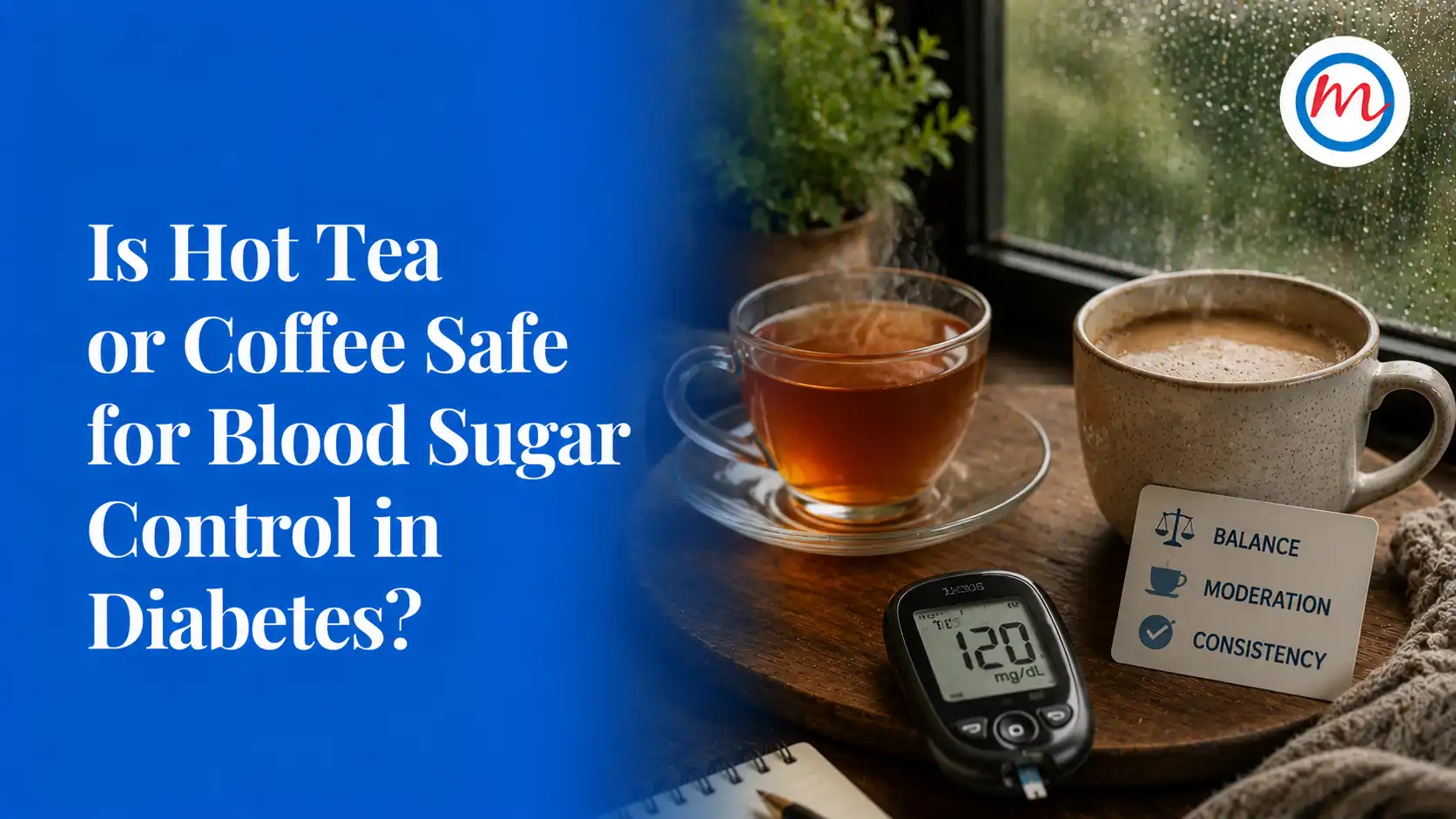
Tea Coffee Diabetes Guide: Is Your Hot Brew Safe for Blood Sugar?
Understanding the tea coffee diabetes relationship is essential for anyone managing blood glucose during the monsoon season. As the monsoon sky darkens and rain begins to fall, few things feel more comforting than a hot, steaming mug of masala chai or a freshly brewed cup of filter coffee. In India, tea and coffee are more than just beverages; they are deep-rooted daily rituals. During the damp, cool rainy season, the urge to enjoy multiple cups throughout the day naturally intensifies.
For individuals managing diabetes, these hot beverages frequently raise questions. Can a morning cup of black coffee actively improve insulin sensitivity, or does your evening milk tea quietly trigger a post-meal glucose spike? Let us dive into the clinical realities of tea coffee diabetes management, explore the metabolic benefits and risks, and establish the best practices for enjoying your favourite hot brews safely.
How Tea and Coffee Affect Diabetes and Blood Sugar
The relationship between caffeine, tea polyphenols, and blood glucose control is a balancing act. When consumed in their pure, unaltered states, these beverages interact with your body in several distinct ways.
The Metabolic Benefits
- Rich in Bioactive Polyphenols: High-quality black, green, and oolong teas are packed with epigallocatechin gallate (EGCG) and unique flavonoids. These natural antioxidants combat cellular inflammation, improve endothelial function, and support insulin pathway efficiency, making unsweetened tea a genuinely useful tool in tea coffee diabetes management.
- Chlorogenic Acid in Coffee: Coffee contains a potent compound known as chlorogenic acid, which clinical studies suggest slows the absorption of glucose in the intestines and helps optimize liver glucose metabolism.
- Zero-Calorie Baseline: A simple cup of black tea or black coffee brewed in pure water contains virtually zero calories, zero carbohydrates, and zero fat. It provides an excellent, comforting alternative to packaged beverages or carbonated soft drinks.
- Sharper Cognitive Focus: The natural caffeine content acts as a mild central nervous system stimulant, temporarily dispelling monsoon lethargy, increasing alertness, and boosting energy levels.
The Nutritional Risks
- The Refined Sugar Hazard: The primary tea coffee diabetes danger rarely stems from the leaves or beans themselves; it stems from what is added to the cup. Adding white sugar, brown sugar, jaggery, honey, or condensed milk sends simple, fast-acting carbohydrates straight into your bloodstream, causing a rapid glycemic spike.
- The Creamer and Whole-Milk Trap: Commercial coffee creamers, powdered whiteners, and heavy whole-milk additions are packed with hidden corn syrup solids, trans fats, and saturated lipids. These ingredients slow down digestion but significantly elevate insulin resistance over time.
- The Frequency Multiplier: Drinking four or five small cups of sweetened tea throughout a rainy day creates a state of continuous, low-grade hyperglycemia. Your pancreas is forced to constantly secrete insulin, exhausting your beta cells and destabilizing your baseline HbA1c levels.
Best Practices for Safe Tea Coffee Diabetes Consumption
You do not have to forfeit your morning or evening hot beverage rituals. By establishing a few strict boundaries, you can fully enjoy your drinks while keeping your metabolism flat and stable. The American Diabetes Association recommends choosing beverages with zero added sugars as one of the simplest daily habits for better glucose control.
Transition to the Naked Cup
Train your palate to enjoy the authentic, complex flavors of your tea leaves and coffee beans without masking them with sweeteners. If you cannot tolerate completely bitter flavors initially, gradually reduce your added sugar by half every three days until your beverage is completely sugar-free. Avoid replacing sugar with jaggery or honey, as your body processes these exactly like table sugar. This single habit transforms your daily cup from a tea coffee diabetes risk into a genuine health asset.
Disconnect the Beverage from the Snack
In many households, a cup of tea is incomplete without a side of biscuits, rusks, khari, or fried namkeen. Most commercial biscuits, even those labeled as sugar-free or digestive, are made primarily of refined flour (maida) and hydrogenated fats. This pairing turns a harmless beverage into a high-calorie, glycemic trigger. Drink your tea in isolation, or pair it with a small handful of raw walnuts or almonds.
Step Away from Café Culture Specialties
During the monsoon, it is highly tempting to order specialty coffee drinks like flavored lattes, mochas, frappés, or cappuccinos from local coffee shops. These drinks are often laced with commercial caramel or vanilla syrups, whipped cream, and chocolate drizzles. A single large specialty coffee can contain up to 50 grams of sugar, which is far more than an individual managing tea coffee diabetes balance should consume in an entire day. Stick to basic Americanos, espresso shots, or light milk-based macchiatos.
Can Tea or Coffee Cure Diabetes? Myth vs. Reality
With the rise of internet health trends, various herbal teas, green coffee extracts, and specialized spiced infusions are frequently marketed as natural cures or miracle treatments for Type 2 diabetes.
- The Myth: Drinking bitter herbal concoctions, cinnamon tea, or green coffee will naturally reverse diabetes, allowing you to skip your prescribed medical treatments.
- The Reality: While unsweetened green tea and black coffee provide excellent antioxidant support and fit beautifully into a balanced lifestyle, they cannot cure, reverse, or treat diabetes on their own. The tea coffee diabetes relationship is supportive, not curative. Treating diabetes requires a multi-dimensional approach including structured medical therapies, regular physical exercise, and precise dietary planning. Viewing these beverages as an alternative to your physician-prescribed medications can lead to dangerous, unmanaged hyperglycemia.
The World Health Organization consistently emphasizes that no single food or beverage can replace structured diabetes treatment and lifestyle management.
Frequently Asked Questions (FAQs)
Is jaggery or honey a safer addition to tea than white sugar for diabetes?
No. This is a highly prevalent health misconception in tea coffee diabetes discussions. While jaggery and honey contain minor trace minerals that white sugar lacks, their molecular structure is broken down by your digestive enzymes into simple glucose and fructose almost instantly. They cause the exact same rapid blood sugar spikes as refined white sugar.
Does the caffeine in coffee cause blood sugar levels to rise?
In some individuals, high doses of pure caffeine can cause a brief, temporary surge in adrenaline and cortisol, which signals the liver to release stored glucose into the blood. However, for most long-term, moderate coffee drinkers, this effect is negligible. If you notice your post-coffee numbers spiking regularly despite skipping sugar, consider trying high-quality decaffeinated coffee.
Can I use artificial sweeteners or stevia in my daily tea and coffee?
Yes, US-FDA approved non-nutritive sweeteners or natural plant-based stevia can be used in moderation to help you transition away from refined white sugar in your tea coffee diabetes routine. However, the long-term goal should always be to reduce your overall reliance on intensely sweet flavors to help retrain your taste buds.
How many cups of tea or coffee can a person with diabetes safely drink per day?
For most individuals, keeping your intake to 2 to 3 moderate-sized cups (around 200 to 300 ml total) per day is perfectly safe, provided the drinks are prepared without added sugars and use minimal low-fat or skimmed milk. This is the standard tea coffee diabetes guideline recommended by most clinical nutritionists. Avoid drinking caffeine late in the evening, as it can disrupt your sleep architecture and raise your next-morning fasting sugar levels.
Take Control of Your Diabetes Journey This Monsoon!
Small daily habits like how you prepare your morning tea or coffee can have a massive cumulative impact on your long-term health and metabolic numbers. If your blood glucose levels are fluctuating unpredictably during this rainy season, do not rely on guesswork.
Schedule a comprehensive health evaluation and receive tailored nutrition and lifestyle guidance from the expert clinical teams at Dr. Mohan’s Diabetes Specialities Centre. Learn how to enjoy your favourite seasonal routines while keeping your long-term health completely secure.
Book your clinical consultation and personalized wellness screening today!