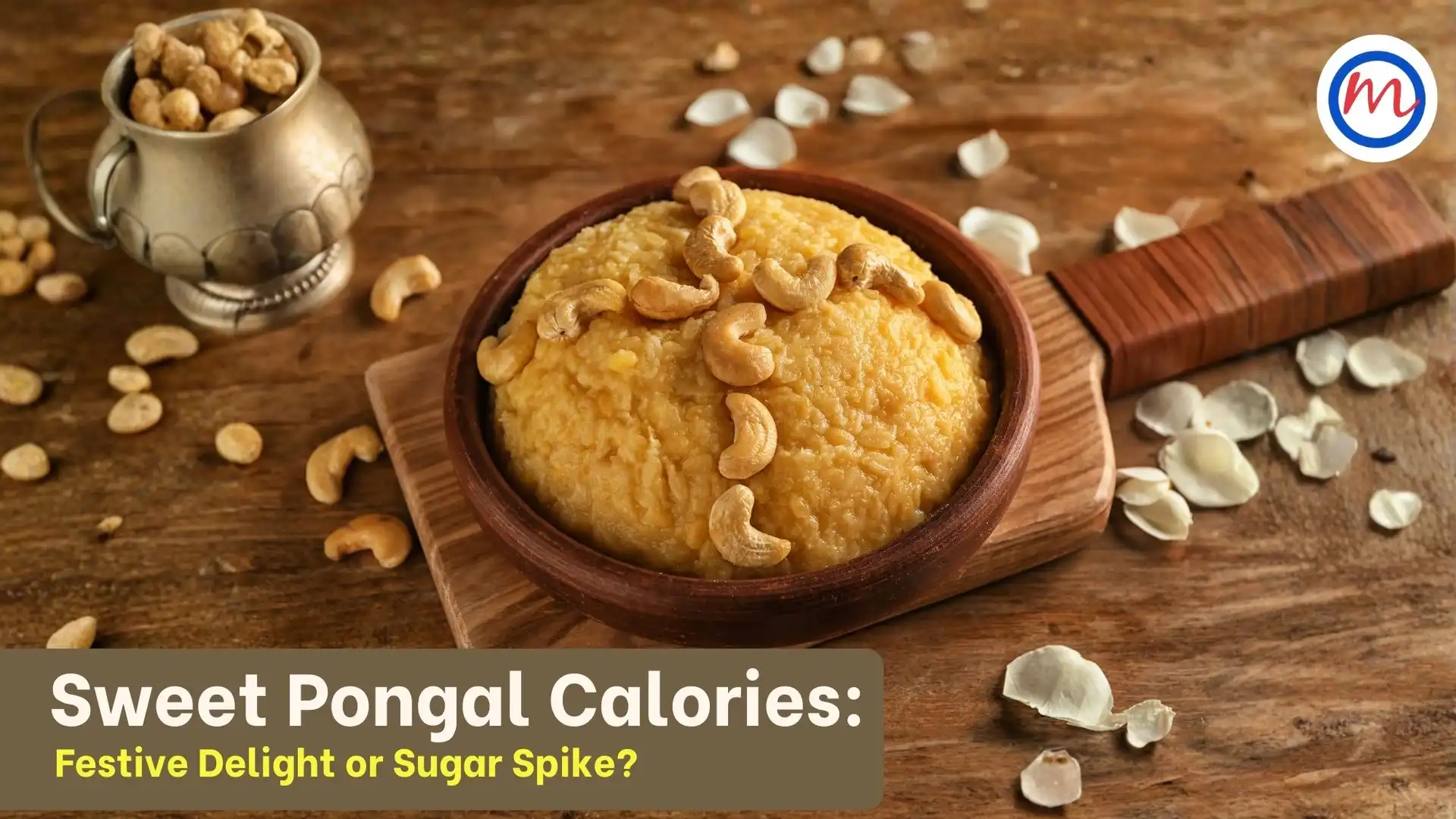
Sweet Pongal Calories: Festive Delight or Sugar Spike?
Sweet Pongal is comfort in a bowl—warm, soft, fragrant with ghee, and irresistibly sweet. It is a dish that makes festivals feel complete and temples feel special. But is this beloved prasadam simply a festive treat, or does it secretly push your blood sugar higher than you expect?
Let’s break down what lies inside this traditional favourite.
Why Sweet Pongal Is Loved (and Seems Harmless)
- Made with rice and dal
Rice gives instant energy and moong dal provides protein, making the base look balanced.
- Natural sweetener (jaggery)
People assume jaggery is “healthier” than sugar. It has minerals, yes—but calorie-wise, it behaves almost the same as sugar.
- Ghee adds aroma and satisfaction
A little ghee improves digestion and gives that temple-style flavour everyone loves.
All of this makes Sweet Pongal feel wholesome.
Where Sweet Pongal Turns into a Sugar Spike
- High jaggery content
Traditional recipes use equal amounts of jaggery and rice. This sends glucose levels up quickly—especially for individuals with diabetes.
- Excess ghee for shine
Some add 2–4 tablespoons of ghee per cup of pongal for that glossy finish.
- Portion sizes are misleading
A small cup looks harmless, but it is usually packed with rice + jaggery + ghee.
- Cashews and raisins fried in ghee
These add more calories without adding much fibre.
Bottom line: Sweet Pongal is energy-dense and fast-digesting, which makes it a sugar spike waiting to happen if eaten in large quantities.
How to Enjoy Sweet Pongal Without the Sugar Shock
- Reduce jaggery by 25–30%
It still tastes sweet, especially when warm. - Increase moong dal proportion
More protein = better satiety + steadier glucose levels. - Add grated coconut or a tablespoon of millet
These increase fibre and slow digestion slightly. - Use 1 teaspoon ghee instead of tablespoons
You still get the aroma without the heaviness. - Make smaller servings
A half-cup serving is enough to enjoy the flavour.
Healthy Sweet Pongal Recipe (Balanced Version)
Ingredients
- Raw rice – ¼ cup
- Moong dal – 3 tablespoons
- Jaggery – 2 tablespoons
- Ghee – 1 teaspoon
- Cardamom – a pinch
- Cashews – 3–4 (dry roasted)
Method
- Dry roast moong dal and wash rice.
- Pressure cook rice + dal with enough water until soft.
- Melt jaggery separately, filter, and mix into the pongal.
- Add cardamom and a teaspoon ghee.
- Add dry-roasted cashews (not fried in ghee).
Approximate Nutritive Value (½ cup serving)
- Calories: ~210 kcal
- Carbohydrates: 36 g
- Protein: 4 g
- Fat: 5 g
- Fibre: 2 g
To know more: click- https://drmohans.com/
Click to book an appointment: https://drmohansdiabetes.co.in/enroll/?campname=website
Understanding Sweet Pongal Calories in a Traditional Festive Meal
Sweet Pongal, or sakkarai pongal, is one of the most beloved festive dishes in South India. But when we break down sweet pongal calories, the picture becomes clearer. The base ingredients — rice, moong dal, jaggery, ghee, and cashews — are all calorie-dense, especially when combined in generous festive portions. Jaggery adds minerals and antioxidants, but it still contributes significant sugar, which can raise post-meal glucose levels quickly. Ghee, though nutritious in moderation, increases total fat and energy intake.
A small katori of sweet pongal can provide anywhere between 250 and 350 kcal depending on how much ghee and jaggery are added. During festivals, servings are often doubled, making sweet pongal calories much higher than most everyday dishes. That is why people who are monitoring their blood sugar or weight need to be mindful of portion size.
Despite this, sweet pongal can still be enjoyed sensibly. Replacing a part of the rice with millet can lower glycaemic impact, while reducing jaggery by 20–30% still keeps the flavour intact. Adding extra moong dal increases protein, helping slow sugar absorption. These small changes reduce overall sweet pongal calories without compromising the festive charm.