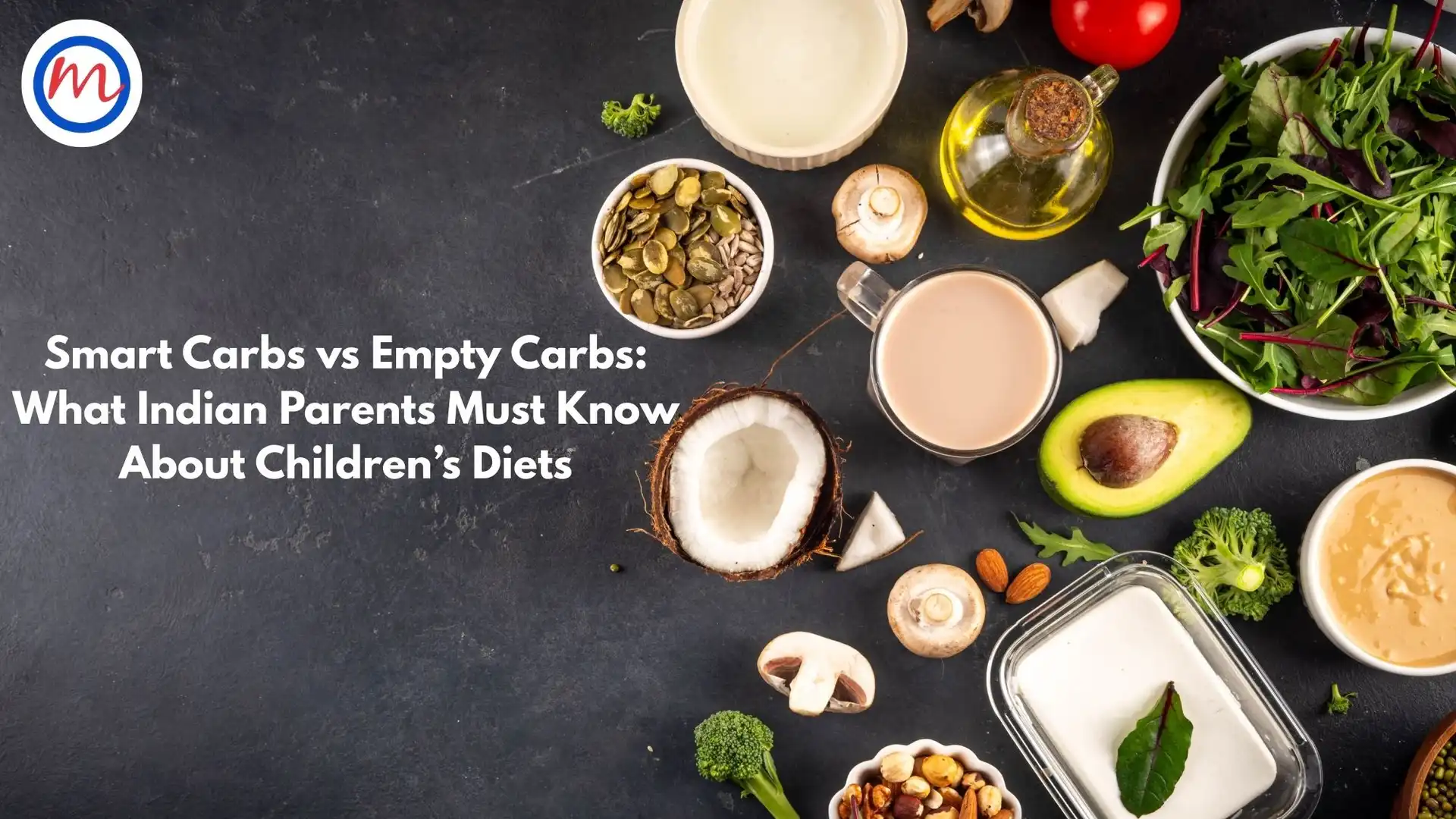
Smart Carbs vs Empty Carbs: What Indian Parents Must Know About Children’s Diets
Carbohydrates are a major part of every Indian child’s diet. From rice and roti to dosa and poha, carbs provide energy for growing bodies. However, not all carbs are equal. Understanding smart carbs for kids versus empty carbs can help parents make meals that keep children full, focused, and healthy.
What Are Smart Carbs for Kids?
Good carbs are carbohydrates that:
-
Are rich in fibre, vitamins, and minerals
-
Release energy slowly, preventing sudden hunger
-
Support digestion and overall health
Examples of good carbs for kids in Indian meals include:
-
Whole grains like brown rice, millets, and oats
-
Whole wheat roti or chapati
-
Lentils and pulses combined with grains
-
Fresh fruits and vegetables
These foods provide steady energy and keep children full longer, reducing the need for constant snacking.
What Are Empty Carbs?
Empty carbs are foods that provide calories but very little nutrition. They often contain refined flour or sugar and are digested quickly, causing hunger soon after eating.
Common empty carbs in children’s diets:
-
White bread and maida-based baked goods
-
Biscuits, pastries, and cakes
-
Refined white rice with little dal or vegetables
-
Instant noodles and packaged snacks
Relying heavily on these foods can lead to energy crashes, poor concentration, and increased snack cravings.
Why Parents Must Focus on Smart Carbs
Using good carbs for kids in meals has multiple benefits:
-
Sustained energy throughout the school day
-
Reduced mid-morning or evening hunger
-
Better digestion and gut health
-
Support for healthy weight and growth
-
Improved immunity and learning ability
Smart carbs help children feel satisfied with smaller portions, reducing unhealthy snacking.
Easy Ways to Include Smart Carbs in Indian Meals
Breakfast
-
Oats porridge with milk and nuts
-
Ragi dosa or idli
-
Whole wheat vegetable upma
-
Poha with peas and peanuts
Lunch
-
Brown rice with dal and vegetables
-
Whole wheat roti with paneer or chicken curry
-
Millet khichdi with vegetables
Snacks
-
Roasted chickpeas or makhana
-
Fruit salads with a sprinkling of seeds
-
Vegetable sticks with hummus
Dinner
-
Vegetable and dal soup with whole wheat toast
-
Roti with lightly spiced lentils or paneer
-
Mixed millet upma
Tips for Transitioning Children to Smart Carbs
-
Gradually replace white rice or refined flour with brown rice, millets, or whole wheat options.
-
Add vegetables or pulses to traditional recipes like upma or khichdi.
-
Offer fruits instead of sweet packaged snacks.
-
Avoid forcing changes—introduce small portions first to develop taste preferences.
Signs Your Child May Need More Smart Carbs
-
Feels hungry shortly after meals
-
Craves sweets or snacks constantly
-
Lacks focus in school
-
Shows low energy or fatigue
Increasing smart carbs for kids can address these issues naturally.
Final Takeaway
Carbs are essential, but quality matters. By choosing good carbs for kids over empty carbs, parents can:
-
Ensure steady energy
-
Reduce unnecessary snacking
-
Support healthy growth, learning, and immunity
Simple swaps and thoughtful meal planning can make a big difference to a child’s health and daily energy levels.
To know more: Click- https://drmohans.com/
Click to book an appointment: https://drmohansdiabetes.co.in/enroll/?campname=website
How Carbs Support Long-Term Health in Children
Including carbs for kids regularly does more than control hunger. These carbohydrates help maintain stable blood sugar levels, which is especially important for children who are physically active and mentally engaged at school. Unlike empty carbs, smart carbs reduce mood swings, prevent sudden tiredness, and support better classroom attention. Over time, diets rich in smart carbohydrates also promote healthier digestion, improved nutrient absorption, and reduced risk of childhood obesity. Teaching children to enjoy smart carbs early helps them develop lifelong healthy eating habits and better food choices as they grow.