Semiya Upma Calories: Is It Really Lighter Than Rava Upma?
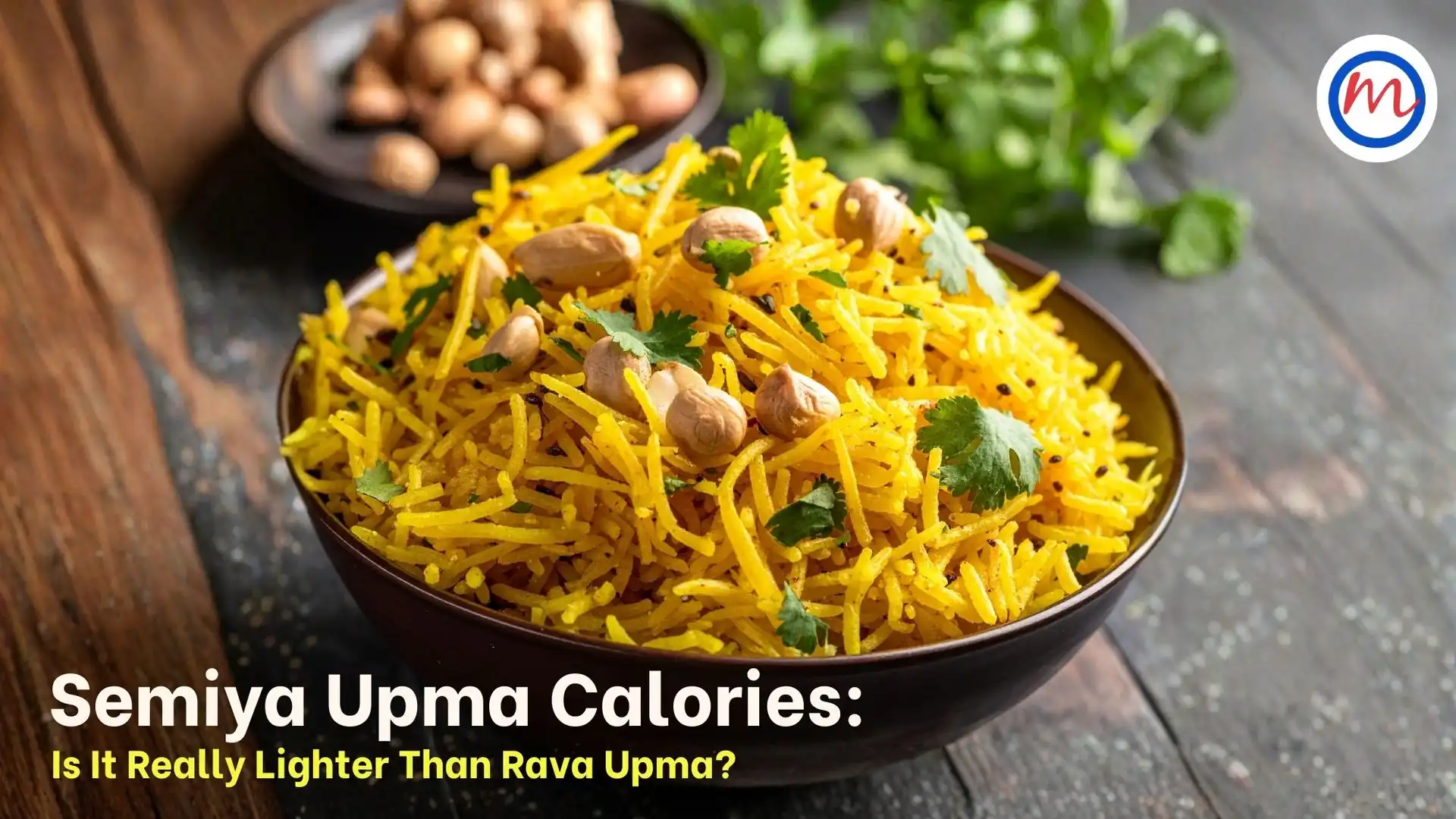
Many people choose semiya upma thinking it is “lighter” than rava upma. It looks delicate, feels airy, and seems gentler on the stomach. But surprisingly, semiya upma and rava upma are not as different as they look — and in some cases, semiya upma can actually be heavier.
Let’s see why.
Why People Think Semiya Upma Is Light
- Thin strands look less filling
The noodle-like structure makes people assume it contains fewer calories.
- Cooks softer and faster
Semiya upma feels less dense, and people mistake softness for lightness.
- No roasting aroma
Since semiya doesn’t need roasting like rava, it gets labelled as “simple” or “less rich”.
But the visual is misleading.
The Hidden Calorie Story
- Semiya needs more oil
To prevent sticking and clumping, many add 1–2 tablespoons of oil, especially with roasted semiya. This increases hidden fat.
- Semiya is refined (maida-based)
Most store-bought semiya is made from refined wheat flour. This means:
- faster digestion
- higher glycaemic impact
- less fibre
- more hunger soon after eating
- Portion size is deceptive
Because semiya shrinks while cooking, people often take more than needed, raising total calories.
- Rava gives more satiety
Rava has slightly more fibre and holds water better. This makes rava upma more filling with similar or fewer calories.
So Which One Is Healthier?
- Calorie-wise: Both are similar.
- Satiety-wise: Rava upma wins.
- Sugar control: Rava upma is better for stable energy levels.
- If using whole wheat or millet semiya: Then semiya upma becomes healthier.
How to Make Semiya Upma Healthier
- Choose whole wheat semiya instead of regular.
- Add more vegetables — carrot, peas, beans, onions and capsicum.
- Use only 1 teaspoon oil, and use a non-stick or thick kadai.
- Add a spoon of roasted chana dal powder to increase protein.
- Add moong dal water (paruppu thanni) while cooking for extra nutrients.
Healthy Semiya Upma Recipe (Improved Version)
Ingredients
- Whole wheat semiya – 1 cup
- Onion – 1 small (chopped)
- Carrot – ¼ cup
- Beans – ¼ cup
- Green peas – 2 tablespoons
- Roasted chana dal powder – 1 tablespoon
- Oil – 1 teaspoon
- Mustard seeds, curry leaves
- Green chilli – 1
- Salt – to taste
- Water – 2 cups
Method
- Heat oil, add mustard seeds, curry leaves and green chilli.
- Add vegetables and sauté.
- Add water and salt; bring to a boil.
- Add semiya and cook till soft.
- Mix in roasted chana dal powder at the end.
Approximate Nutritive Value (Per Serving)
- Calories: ~250 kcal
- Carbohydrates: 42 g
- Protein: 6 g
- Fat: 5 g
- Fibre: 3 g
Understanding Semiya Upma Calories in Everyday Cooking
Many people assume that semiya upma is lighter simply because it looks less dense and uses thin vermicelli strands. But when we examine semiya upma calories, the story becomes more nuanced. Semiya is generally made from refined wheat flour (maida) unless you specifically buy whole-wheat or millet-based vermicelli. This means the glycaemic index is often higher, and the calories per 100 g are comparable to or even slightly higher than rava. What makes it appear lighter is the texture, not the nutritional profile.
When cooked with minimal oil and enough vegetables, semiya upma can be a reasonably balanced dish. But many ready-made vermicelli packs are roasted in oil, which increases semiya upma calories even before you start cooking. Adding ghee, cashews, or excess oil during tempering also increases calorie density without significantly improving satiety.
Comparing Semiya Upma Calories with Rava Upma Calories
A typical serving of semiya upma delivers around 180–220 kcal depending on portion size and added ingredients. Meanwhile, rava upma made with the same amount of oil often falls within a similar calorie range. The difference lies in fibre content — semiya made from refined flour offers lower fibre, making the dish less filling. This can lead individuals to eat larger portions, which automatically increases semiya upma calories consumed in a single meal.
On the other hand, if the semiya is whole-wheat or millet-based, the fibre improves, digestion slows, and satiety increases. This instantly changes the nutritional value and makes the calories more meaningful.
How to Reduce Semiya Upma Calories Without Losing Taste
To make the dish healthier, small adjustments can go a long way. Adding vegetables like peas, carrots, onions, beans, spinach, or capsicum not only enhances taste but also lowers the calorie density per spoonful. Using cold-pressed oils and restricting tempering to one teaspoon significantly reduces semiya upma calories. Choosing whole-wheat or ragi semiya can further improve fibre and protein levels, making the dish more diabetic-friendly and better suited for weight management.
In summary, semiya upma calories depend entirely on the type of semiya used, the amount of oil added, and the portion consumed. When prepared thoughtfully, it can be a light, flavourful, and nourishing breakfast — but without care, it can easily match rava upma in calories.
To know more: https://drmohans.com/
Click to book an appointment/; https://drmohansdiabetes.co.in/enroll/?campname=website