
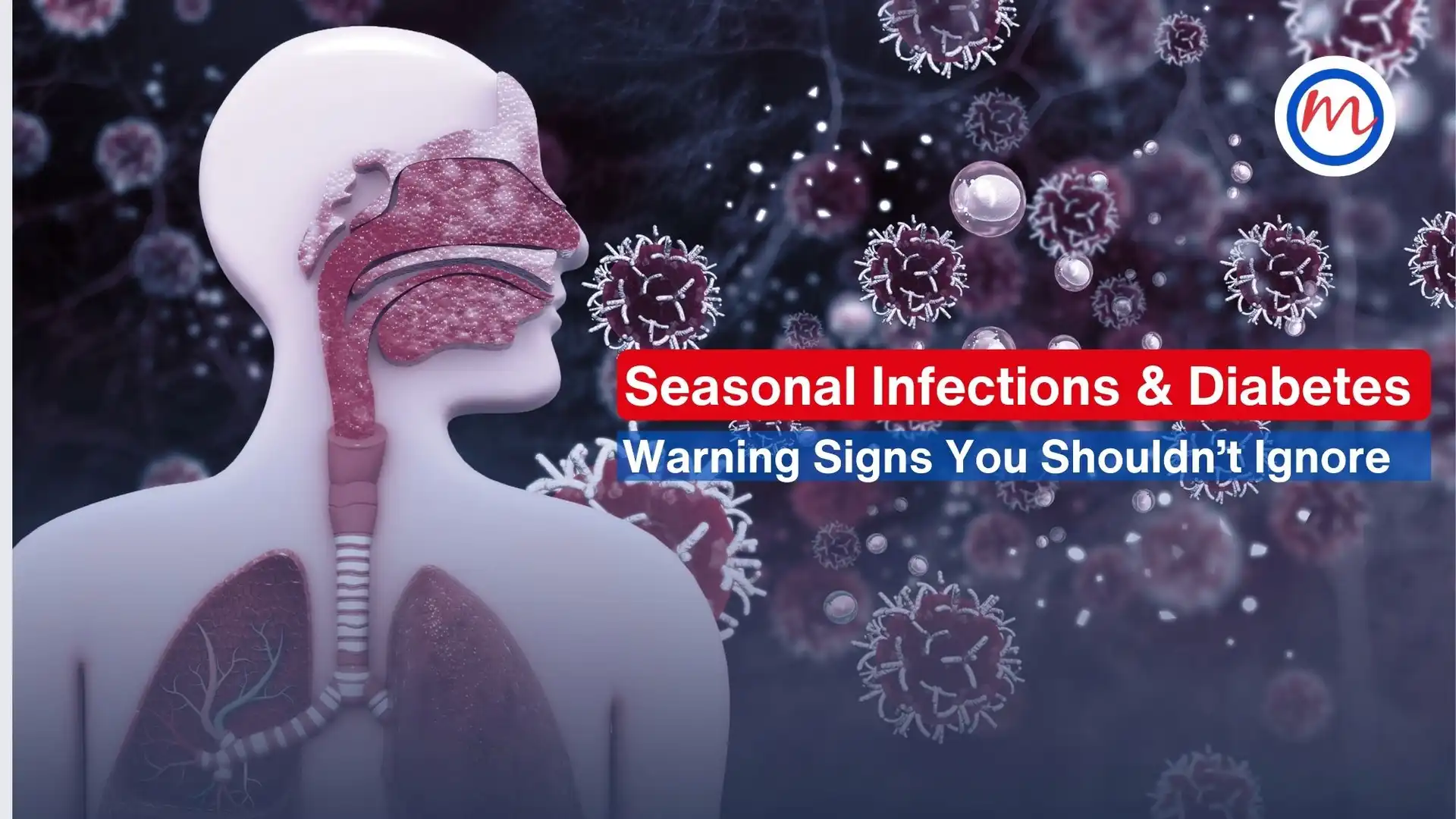
Seasonal Infections & Diabetes – Warning Signs You Shouldn’t Ignore
Whenever there is a change of season, waves of infections like common cold, flu, dengue, pneumonia and skin rashes occur. For most people, these infections are not of much concern. But for people with diabetes, infections are real threats. When blood sugars are high for a longer period of time, the immune system gets weak. This slows down the healing process and creates an environment favourable for microbes to grow. Even when one with diabetes is affected by a minor infection, blood sugars can become erratic. This is why we need to know the link between seasonal infections and diabetes, recognise the warning signs, and take preventive steps.
Why People with Diabetes Are at Greater Risk
High blood sugars impair the immune response of our body. Hence, our white blood cells are unable to fight off the infections. In addition to this, some people might have poor blood circulation. Hence, nutrients and oxygen do not reach the affected tissues, which makes it hard to fight infection and delays recovery. Stress, changes in diet, and dehydration during infections can cause further spikes in blood sugar.
Common Seasonal Infections That Affect Diabetes
- Flu and Viral Fever: Blood sugars go erratic, and affected individuals may feel dehydrated and exhausted.
- Respiratory Infections: Bronchitis and pneumonia are common infections that occur during winter.
- Skin and Fungal Infections: Changes in temperature during seasonal climatic changes encourage fungal growth, especially in the feet and skin folds.
- Vector-borne diseases, such as Dengue and malaria, can severely impact the blood sugar.
Warning Signs You Shouldn’t Ignore
All infections necessarily show any symptoms. For people with diabetes, even subtle changes can be dangerous:
- Fever that does not settle even after taking medications.
- Increased thirst and frequent urination (possible dehydration)
- Shortness of breath or persistent cough
- Unhealed wounds, boils, or pus-filled lesions
- Severe weakness, dizziness, or confusion
When you feel any of these symptoms, do not neglect them. Do consult your doctor and get yourself checked.
Preventive Measures
- Regular Vaccinations: Pneumococcal vaccines, influenza vaccines and shingles vaccines need to be taken as recommended.
- Maintain Blood Sugar Levels: Keep checking the blood sugar and keep it under control.
- Hydration & Balanced Diet: You need to take adequate water. Vegetables and fruits need to be taken regularly.
- Hygiene Practices: Regular handwashing, sanitisation, and avoiding crowded places during outbreaks.
- Timely Medical Check-ups: Periodic check-ups are essential to detect infections early and treat them.
Seasonal infections may seem harmless, but for people with diabetes, they can have lasting consequences. By being proactive, taking early prevention steps and taking adequate measures, we can prevent infections and control blood sugars at the same time
For more
To book an appointment: https://drmohansdiabetes.co.in/enroll/?campname=website