
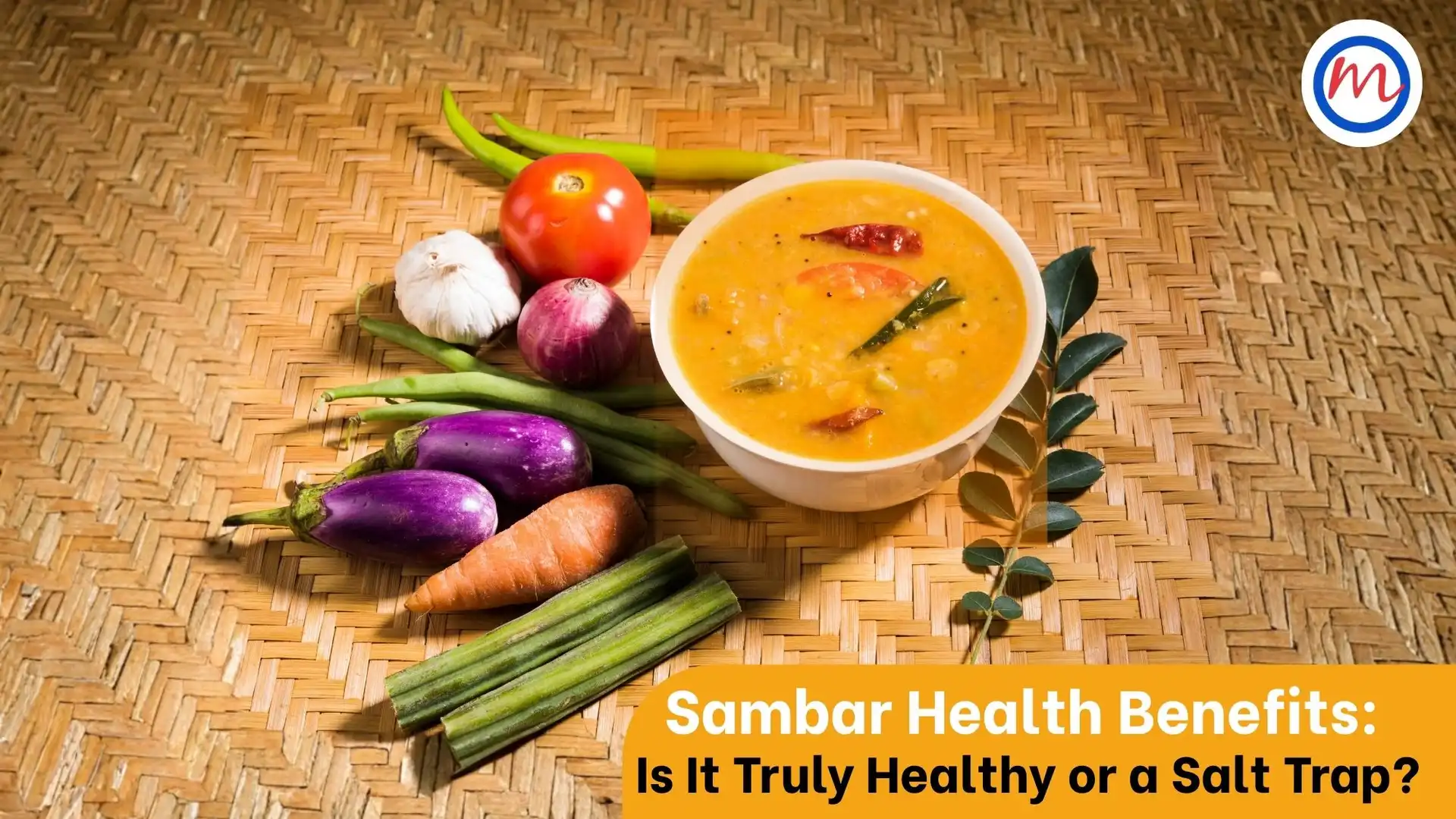
Sambar Health Benefits: Is It Truly Healthy or a Salt Trap?
Sambar is one of South India’s proudest creations—nutritious, aromatic, comforting, and perfect for combining with everything from idly to rice. It is commonly celebrated as a “healthy dish.” And yes, it can be. But in many homes and restaurants today, sambar quietly becomes a salt-heavy, calorie-dense bowl without anyone realising it.
Let’s break down the truth.
Why Sambar Is Considered Healthy
Traditionally prepared sambar is a nutrient-rich dish for good reasons:
- Lentils (Toor dal)
They provide plant-based protein, iron and slow-digesting carbohydrates. - Vegetables
Drumstick, pumpkin, brinjal, carrots, spinach—each adds vitamins, fibre and antioxidants. - Tamarind + Spices
These improve digestion and add flavour without extra calories.
By design, sambar is a wholesome, balanced dish.
So Where Does It Become a Salt Trap?
The problem isn’t in the sambar itself—it’s how it’s made today. Sambar health benefits are affected by the salt content.
- Restaurant sambars are extremely salty
To impress the palate and balance sourness, eateries often use much more salt than required. This makes one small bowl shoot up your sodium intake for the day. - Sambar podi with added salt
Many commercial sambar powders already contain salt. When people add extra salt during cooking, the dish becomes unintentionally double-salted. - Extra tamarind indirectly leads to more salt
If the sambar turns too sour due to excess tamarind, people balance it with more salt, increasing sodium content unnecessarily. - Large portions
A seemingly innocent “one more ladle of sambar” on rice can significantly increase sodium without your awareness.
How to Make Sambar Healthier
The good news? Sambar health benefits can easily return to being the nutritious classic it was meant to be.
- Use homemade sambar powder without salt
This gives you better control over seasoning. - Limit tamarind so you don’t need extra salt to adjust taste.
- Add more vegetables to increase fibre and volume.
- Use less dal if you want to reduce calories—½ cup is more than enough for a family.
- Avoid regular use of restaurant sambars—they are the biggest salt offenders.
Healthy Sambar Recipe (Improved Version)
Ingredients
- Toor dal – ¼ cup
- Mixed vegetables – 1 cup
- Homemade sambar powder (no added salt) – 1 teaspoon
- Tamarind – small gooseberry-sized
- Mustard seeds – ½ teaspoon
- Curry leaves – few
- Turmeric – ¼ teaspoon
- Salt – as required
- Oil – 1 teaspoon
Method
- Pressure-cook dal until soft and mash well.
- Cook vegetables separately.
- Add dal, vegetables, tamarind water and sambar powder to a pot; let it simmer.
- Temper mustard, curry leaves and turmeric in oil and add to sambar.
- Adjust salt carefully and simmer for 5 minutes.
Approximate Nutritive Value (Per Serving)
- Calories: ~110 kcal
- Carbohydrates: 15 g
- Protein: 4 g
- Fat: 3 g
- Fibre: 3 g
- Sodium: Depends on salt added, so control is key
To know more: https://drmohans.com/
Click to book an appointment: https://drmohansdiabetes.co.in/enroll/?campname=website
Sambar Health Benefits: Why This Traditional Dish Is Truly Nutritious
When we talk about wholesome South Indian meals, sambar health benefits immediately stand out. Made from protein-rich toor dal, antioxidant-packed spices, and a variety of vegetables, sambar offers a complete nutritional profile in one bowl. The combination of dal and vegetables provides fibre that supports digestion, stabilises blood sugar levels, and promotes satiety. The spices used—turmeric, cumin, fenugreek, mustard seeds—contribute anti-inflammatory and gut-friendly properties. Because it is naturally low in fat and nutrient-dense, sambar easily fits into weight-management plans and diabetes-friendly diets. Whether eaten with rice, idli, dosa, or millets, it enhances the overall nutrition of the meal.
Sambar Health Benefits vs. Sodium Levels: What Should You Watch Out For?
While there are many sambar health benefits, sodium content is one area that needs attention. In many restaurants or canteens, extra salt is added to boost flavour, increasing the sodium load without people noticing. For individuals with hypertension or heart concerns, this can be a hidden risk. Store-bought sambar powders may also contain added sodium. However, with simple adjustments—like reducing salt by 20 percent, using fresh homemade sambar powder, and relying on tamarind for natural tanginess—you can protect your health while still enjoying the rich taste. Tamarind enhances flavour, allowing you to reduce salt without compromising taste.
How to Maximise Sambar Health Benefits at Home
If you want to get the most out of sambar health benefits, a few small tweaks can make a big difference. Increase the quantity of vegetables to boost fibre and reduce overall sodium per serving. Add a mix of dals, such as a spoon of moong dal along with toor dal, to improve protein quality. Use minimal oil for tempering, and avoid reheating oil to prevent trans-fat formation. Including vegetables like pumpkin, drumstick, ladies’ finger, or spinach can add vitamins, minerals, and phytonutrients. With these practices, sambar becomes a heart-friendly, diabetes-friendly, and nutrient-rich dish suitable for everyday meals.