
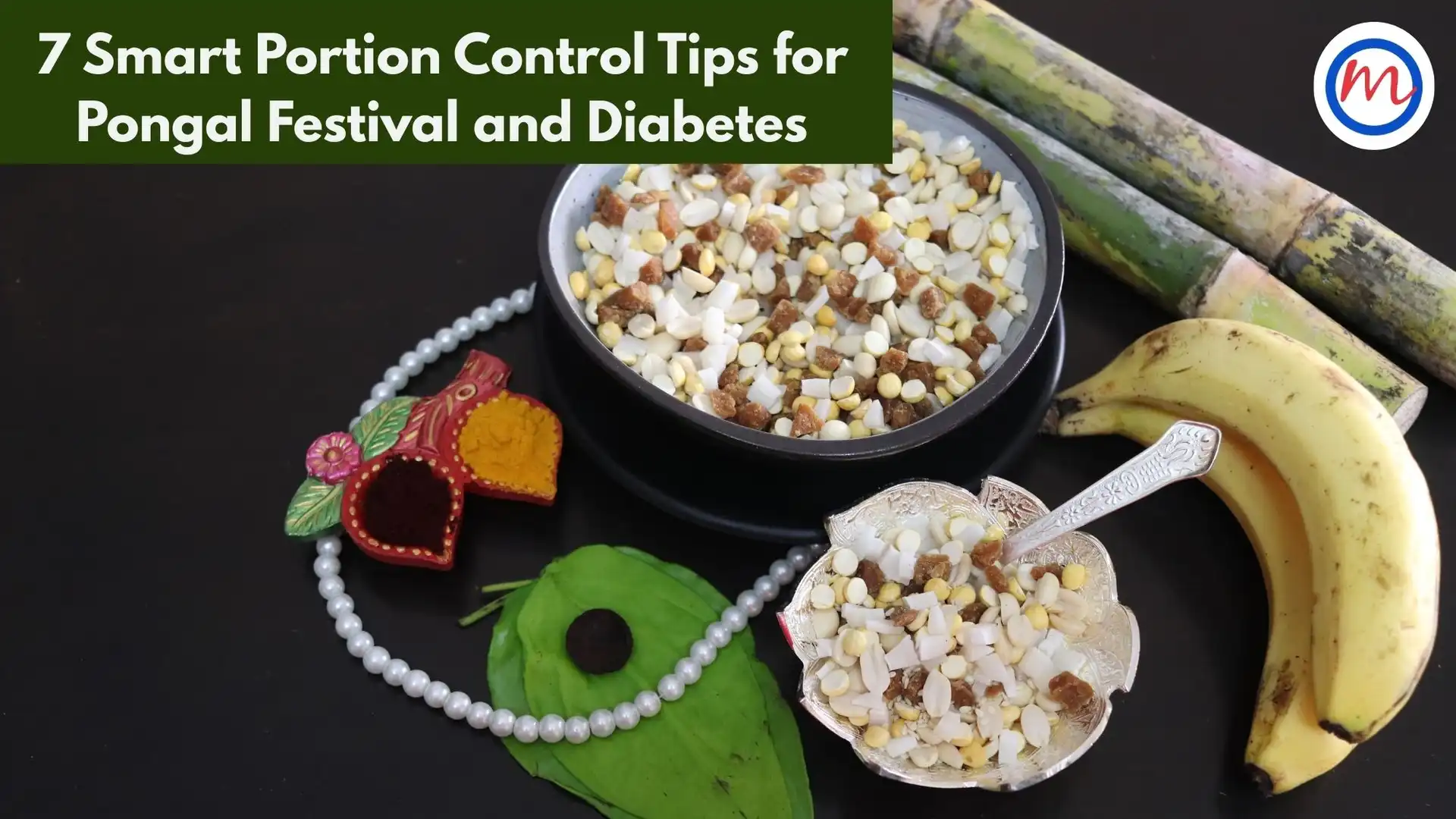
7 Smart Portion Control Tips for Pongal Festival and Diabetes
Pongal festival and diabetes often raise concerns for people who enjoy traditional foods but worry about blood sugar spikes. Pongal is more than a meal—it represents gratitude, harvest, and togetherness. With mindful portion control, proper timing, and balanced combinations, people with diabetes can enjoy both sweet Pongal and ven Pongal safely without compromising glucose control.
Pongal Festival and Diabetes: Why Blood Sugar Rises
Pongal festival and diabetes can coexist safely when festive foods are enjoyed with awareness. Understanding how portion size, timing, and food combinations influence glucose levels helps people make confident choices during celebrations. With controlled servings of sweet Pongal, mindful portions of ven Pongal, regular meals, and post-festival monitoring, Pongal festival and diabetes management become practical rather than restrictive. Tradition and health can be balanced with thoughtful planning.
Every January, as the aroma of freshly cooked pongal fills homes across Tamil Nadu, many of my patients ask the same question: “Doctor, can I eat pongal if I have diabetes?” Pongal is not just food—it is tradition, gratitude, and celebration. The concern is understandable, especially when blood sugar readings tend to rise after the festival.
From years of clinical practice, I can say this clearly: people with diabetes do not need to avoid Pongal altogether. What matters most is portion control, timing and balance.
How rice-based Pongal dishes affect glucose levels
Both sweet pongal and ven pongal are rice-based dishes. Rice, especially polished white rice, raises blood glucose levels quickly. Sweet pongal further contains jaggery, ghee and nuts, increasing the sugar and fat load. Ven pongal, though savoury, is often eaten in large portions and paired with coconut chutney or ghee, which adds to calorie intake.
During festivals, reduced physical activity and irregular meal timings further contribute to post-meal sugar spikes.
Sweet pongal: A festive treat, not a daily dish
Sweet pongal is traditionally made with rice, jaggery, ghee, and lentils. While jaggery is often considered healthier than sugar, it still raises blood sugar levels significantly. Ghee and nuts delay digestion, keeping glucose levels elevated for longer periods.
My advice to patients is simple:
- Limit sweet pongal to 2–3 small spoonfuls
- Eat it after a balanced meal, not on an empty stomach
- Avoid second servings, even if the taste tempts you
Planning a single controlled portion is far safer than multiple tastings across the day.
Ven pongal: Safer, but not unlimited
Ven pongal is often assumed to be completely safe because it does not contain jaggery. However, it is still rice-based and can cause significant sugar rises when eaten in large quantities.
To make ven pongal diabetes-friendly:
- Reduce the rice-to-dal ratio; use more dal than rice
- Add vegetables such as carrots, beans or spinach
- Limit ghee and avoid heavy accompaniments
A small bowl of ven pongal paired with vegetables or sambar is preferable to a large serving eaten alone.
Portion size matters more than ingredients
Many people focus on what they eat during Pongal but ignore how much. In diabetes management, portion size often matters more than the type of food. Even healthy foods can disrupt sugar control when eaten in excess.
Using smaller bowls and serving yourself once helps prevent unconscious overeating.
Timing your Pongal meals wisely
Eating pongal late at night or skipping meals earlier in the day to “make space” often leads to sugar fluctuations. I recommend:
- Eating regular meals on festival days
- Avoiding late-night indulgence
- Maintaining usual medication timings
Consistency protects blood sugar stability.
Common mistakes I see after Pongal
Post-Pongal clinic visits often reveal similar patterns:
- Repeated tasting of sweet pongal
- Skipping meals to compensate
- Assuming jaggery is harmless
- Reducing medication doses without consultation
These habits, even if followed for just a day or two, can destabilise sugar levels for several days.
Monitoring after the festival
It is advisable to check fasting and post-meal blood sugar levels for two to three days after Pongal. Temporary elevations may settle with routine meals and hydration. Persistent high readings, however, need medical attention.
A word of reassurance
Pongal celebrates abundance and gratitude. Diabetes care should not take away from this joy. With mindful portions, balanced meals and regular monitoring, people with diabetes can participate fully in the festival without guilt or fear.
As I often tell my patients, festivals test our planning, not our willpower. Thoughtful choices make all the difference.
Final takeaway:
Enjoy pongal as part of your tradition—but let portion control be your strongest ally in keeping blood sugar levels in range.
To know more click: https://drmohans.com/
Click to book an appointment: https://drmohansdiabetes.co.in/enroll/?campname=website
Pongal festival and diabetes can coexist safely when festive foods are enjoyed with awareness. Understanding how portion size, timing, and food combinations influence glucose levels helps people make confident choices during celebrations. With controlled servings of sweet Pongal, mindful portions of ven Pongal, regular meals, and post-festival monitoring, Pongal festival and diabetes management become practical rather than restrictive. Tradition and health can be balanced with thoughtful planning.