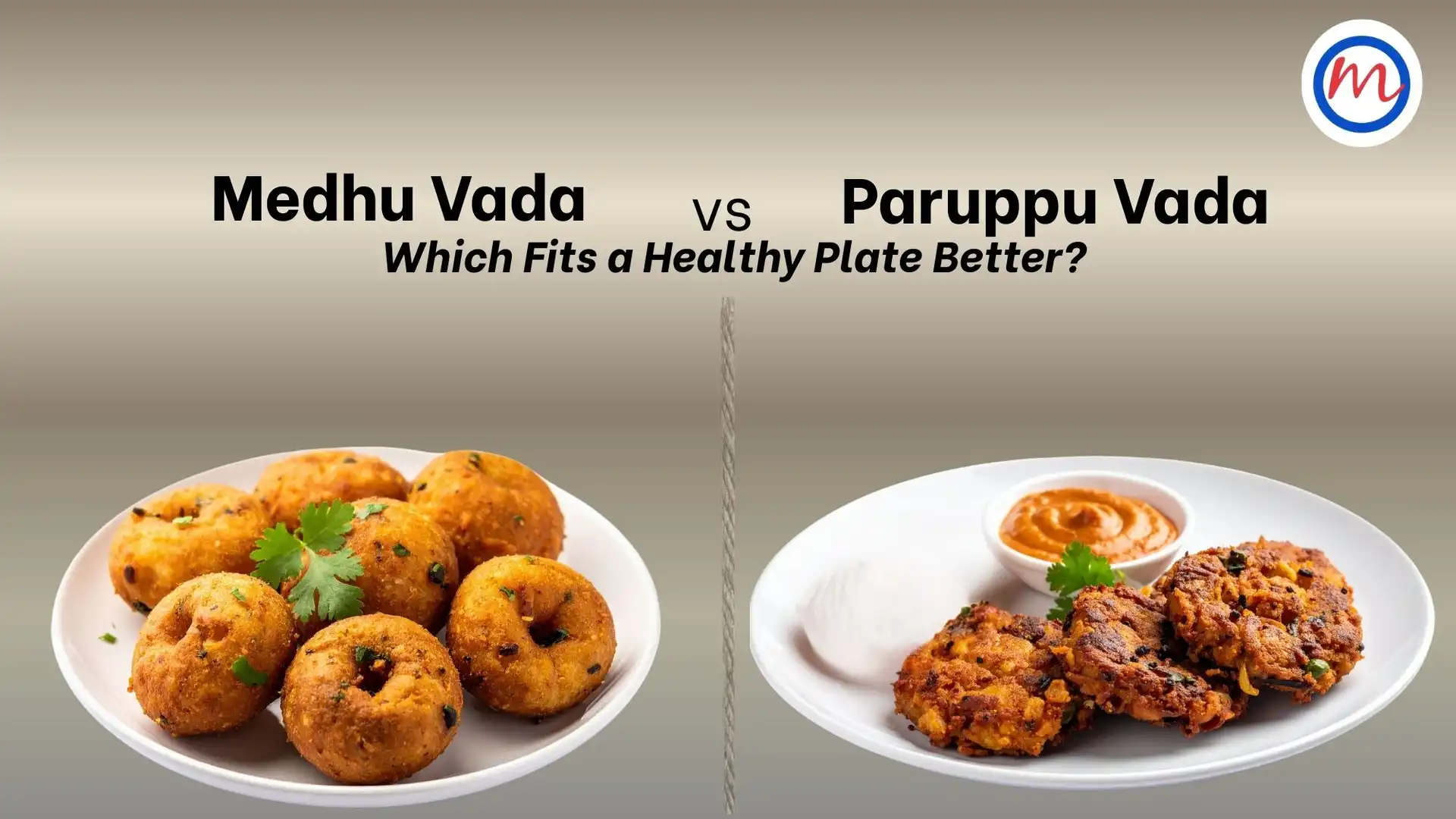
Medhu Vada vs Paruppu Vada: The Healthier Choice You’ll Love
Both vadais look delicious, both are deep-fried, and both sit proudly on South Indian tiffin plates. But when it comes to nutrition, Medhu Vada and Paruppu Vadai behave very differently in your body.
One is airy and soft.
One is dense and crunchy.
But which one actually works better for your health?
Let’s find out.
What Makes Medhu Vada Different?
Medhu vadai is made mainly from urad dal.
That makes it:
- Higher in protein
Urad dal gives more plant protein, which supports muscle strength and keeps you full longer.
- Softer but oil-absorbing
Because the batter is fluffy, it absorbs more oil during frying.
That means:
- More fat
- More calories
- More chances of heaviness
- Easy to digest (without excess oil)
Urad dal is gut-friendly when used right.
So nutritionally, Medhu Vada starts healthier — but ends heavier because of oil absorption.
What Makes Paruppu Vadai Different?
Paruppu vadai uses chana dal + toor/moong dal mixtures.
- Higher in fibre
Chana dal has good dietary fibre, helping digestion and improving satiety.
- More dense, less oil absorption
Since the batter is coarse, the vadai doesn’t drink as much oil as medhu vadai.
- Crunchy but heavier to digest
It’s rich and filling but may feel heavy for those with gut issues.
- Often deep-fried for longer
To get that golden, crispy bite, it cooks longer—adding calories.
So Which One Fits a Healthy Plate Better?
If you want more protein:
Medhu Vada wins.
(Provided you make it with less oil.)
If you want more fibre and less oil absorption:
Paruppu Vadai wins.
But overall health score?
Paruppu Vadai slightly edges ahead because it absorbs less oil and keeps you full longer.
However, both are still fried snacks — meaning portion control is everything.
How to Make Both Healthier
Tips for Medhu Vada
- Add 1 tablespoon of moong dal for more protein.
- Shape with wet hands to reduce oil absorption.
- Air-fry or shallow fry (occasionally).
- Drain on tissue immediately.
Tips for Paruppu Vada
- Add more onions, curry leaves and spinach.
- Do not grind the dal too smooth—coarse batter = less oil.
- Use only 1 teaspoon oil for tempering if making a “tikkia” version on tawa.
Healthy Recipe: Mixed Dal Vadai (A Better Alternative)
Ingredients
- Chana dal – ¼ cup
- Toor dal – 2 tablespoons
- Moong dal – 2 tablespoons
- Onion – 1 small
- Green chilli – 1
- Spinach – ¼ cup chopped
- Curry leaves – a few
- Jeera – ½ teaspoon
- Oil – 1–2 teaspoons (for shallow fry)
- Salt – to taste
Method
- Soak dals for 2 hours and grind coarsely.
- Add onions, spinach, chillies, jeera and salt.
- Shape into small patties.
- Shallow-fry on tawa until crisp on both sides.
Approximate Nutritive Values (Per Piece)
Medhu Vada (deep-fried)
- Calories: 110–130
- Carbohydrates: 10 g
- Protein: 4 g
- Fat: 7 g
Paruppu Vadai (deep-fried)
- Calories: 90–110
- Carbohydrates: 8 g
- Protein: 3 g
- Fat: 6 g
Healthy Mixed Dal Tawa Vadai
- Calories: ~60–70
- Protein: 4 g
- Fat: 2 g
- Fibre: High
To know more: https://drmohans.com/
Click to book an appointment: https://drmohansdiabetes.co.in/enroll/?campname=website
Medhu Vada vs Paruppu Vadai: Which One Truly Fits a Healthy Plate?
When comparing medhu vada vs paruppu vadai, many people assume both are equally indulgent, but their ingredients and nutrition profiles tell a different story. Medhu vada is made primarily from urad dal, which gives it a soft, airy texture but also allows it to absorb more oil during deep-frying. Paruppu vadai, on the other hand, uses channa dal, which is denser, richer in fibre, and naturally absorbs slightly less oil.
Medhu Vada vs Paruppu Vadai: Nutrient Differences
The key difference in medhu vada vs paruppu vadai lies in protein and fibre content. Urad dal in medhu vada offers good-quality protein but becomes calorie-dense once fried. Paruppu vadai has more fibre and a lower glycaemic load, making it a steadier option for blood sugar control. However, both can become unhealthy when fried in reused oil or made in bulk in commercial kitchens.
Making the Healthier Choice
If you are deciding between medhu vada vs paruppu vadai, portion size and preparation method matter the most. Air-frying or pan-frying reduces calories significantly. Pair either vadai with sambar or vegetable chutney to add fibre and balance the meal.