
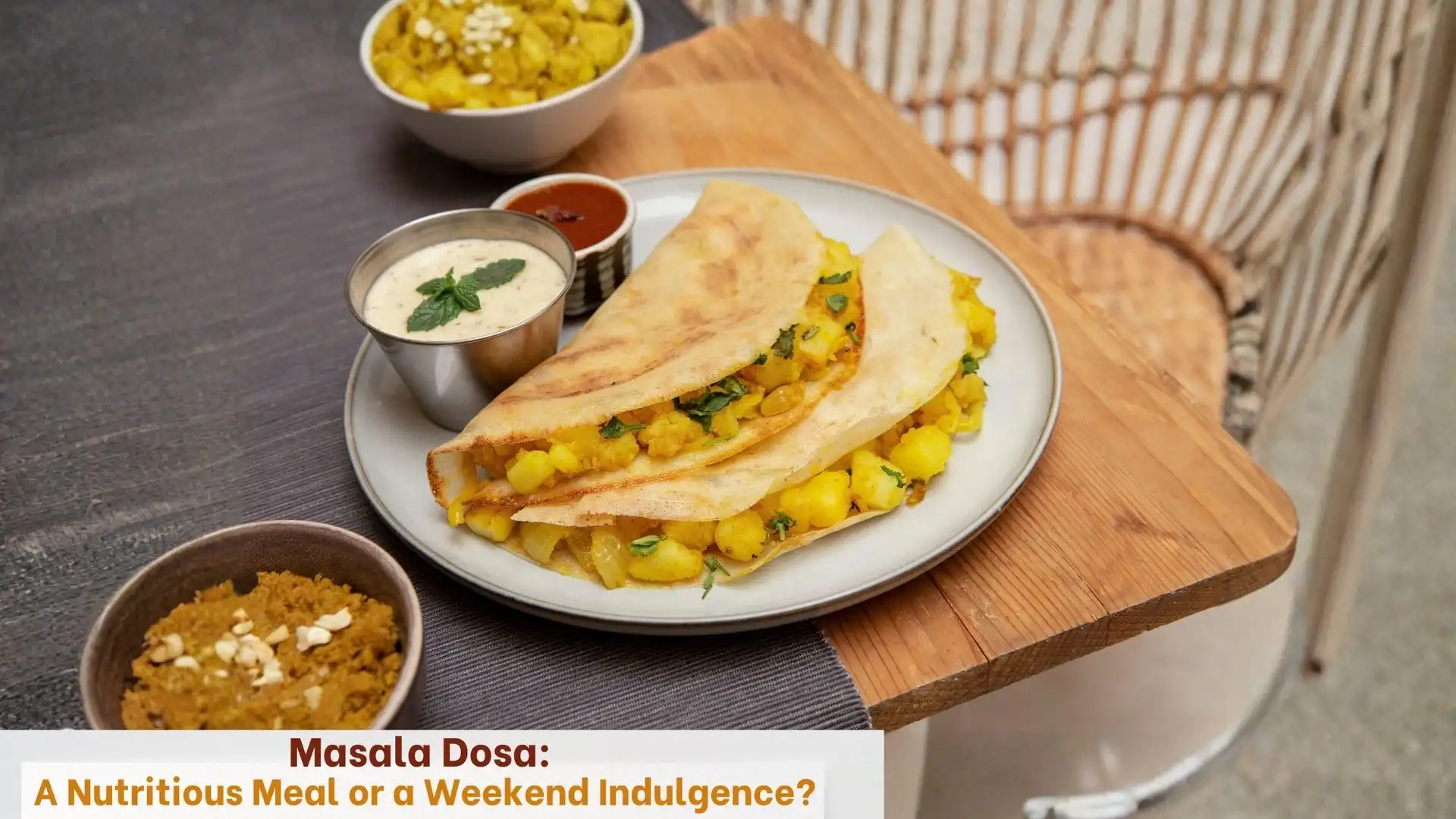
Masala Dosa: A Nutritious Meal or a Weekend Indulgence?
Masala dosa is one of the most iconic South Indian dishes — crisp, golden, aromatic and deeply satisfying. But the big question remains: Is masala dosa actually healthy, or should it be reserved for special occasions?
Let’s break it down clearly.
Is Masala Dosa Healthy? The Nutrient Breakdown
A traditional masala dosa is made from fermented rice and urad dal, which makes it naturally rich in carbohydrates, plant protein, B vitamins and gut-friendly bacteria. Fermentation improves digestibility and enhances nutrient absorption.
A typical masala dosa contains:
• Energy: 350–450 kcal
• Carbohydrates: 50–60 g
• Protein: 7–10 g
• Fat: 12–18 g
• Fibre: 3–4 g
The dosa alone is nutritious, but the real calorie load enters with the aloo masala, oil used for roasting, and size of the dosa.
Where Masala Dosa Turns into a Weekend Indulgence
• Oil-rich roasting: Many hotels use excess oil to achieve the perfect crispness, increasing fat and calories.
• Starchy potato filling: Traditional aloo masala is delicious but adds more carbs and less protein.
• Large portion size: Restaurant dosas are often oversized, equalling two homemade dosas.
• Reused oil: Street-style dosa stalls may reuse oil, increasing trans fats.
How to Make Masala Dosa Healthier
You don’t need to give it up — just tweak it.
• Use a mixed dal batter (add green gram or chana dal).
• Replace 50% of the filling with vegetables (carrot, beans, peas, spinach).
• Roast the dosa with minimal oil or use a cast-iron pan.
• Add paneer or sprouts to increase protein.
• Choose small or medium size instead of giant restaurant versions.
So… Nutritious Meal or Weekend Indulgence?
It can be both.
When made at home with controlled oil and a vegetable-rich filling, masala dosa is a wholesome, balanced meal.
When eaten outside — oversized, oil-heavy and paired with potato-rich masala — it becomes a high-calorie indulgence.
To know more: https://drmohans.com/
Click to book an appointment: https://drmohansdiabetes.co.in/enroll/?campname=website
Masala dosa is one of those dishes we order with zero guilt. It feels traditional, wholesome, and filling. But depending on how it is prepared, this South Indian favourite can swing between being a balanced meal and a calorie-loaded weekend indulgence.
Let’s look at what really happens on the tawa.
Why Masala Dosa Can Be Nutritious
When prepared the traditional way, masala dosa ticks many good boxes:
- Fermented batter = gut-friendly
The combination of rice and urad dal allows good bacteria to form, improving digestion and nutrient absorption.
- Dal gives protein
Urad dal adds plant-based protein, making the dosa more balanced than plain rice dishes.
- Potato masala has fibre
Onions, potatoes, curry leaves, peas—all add nutrients and keep you full.
This version is a perfectly reasonable meal.
Where It Turns into a Weekend Indulgence
- Too much oil or ghee
A single restaurant dosa can have 2–4 teaspoons of oil just to get that crisp, golden finish.
- Large portions
Some dosas are nearly the size of a dining table. A bigger dosa means more batter, more oil, and more stuffing.
- Overloaded masala
Extra potato, more frying, more salt—this dramatically increases calories.
- Chutneys with hidden calories
Groundnut and coconut chutneys can contain generous amounts of oil or coconut.
In restaurants, masala dosa easily becomes a 500–700 calorie meal.
How to Keep Masala Dosa Healthy at Home
- Increase dal proportion in batter
Add more urad dal or a handful of moong dal for extra protein and softness. - Use just 1 teaspoon of oil
A well-seasoned tawa doesn’t need excess oil. - Lighten the potato masala
Add carrots, peas, capsicum, cabbage or even sprouts. - Try a smaller dosa
Two small ones are healthier than one giant restaurant-style dosa. - Serve with vegetable sambar
It adds fibre, reduces glycaemic impact and balances the meal.
Healthy Masala Dosa Recipe (Improved Version)
Ingredients
For Batter:
- Parboiled rice – 1 cup
- Urad dal – ½ cup
- Moong dal – 2 tablespoons
- Fenugreek seeds – ½ teaspoon
For Masala:
- Potatoes – 2 medium
- Onion – 1
- Green peas – ¼ cup
- Carrot (grated) – ¼ cup
- Turmeric – ¼ teaspoon
- Oil – 1 teaspoon
- Mustard seeds, curry leaves
- Salt – to taste
Method
- Soak rice, urad dal and moong dal; grind and ferment batter overnight.
- Make the masala by sautéing mustard, onions, carrot and peas; add boiled potatoes.
- Pour batter on a hot tawa, spread thin and drizzle minimal amounts of oil.
- Place a spoon of masala in the centre and fold.
Approximate Nutritive Value (1 dosa + masala)
- Calories: ~320 kcal
- Carbohydrates: 45 g
- Protein: 8 g
- Fat: 9 g
- Fibre: 4 g