Is Kara Kuzhambu Healthy? The Surprising Truth You Must Know
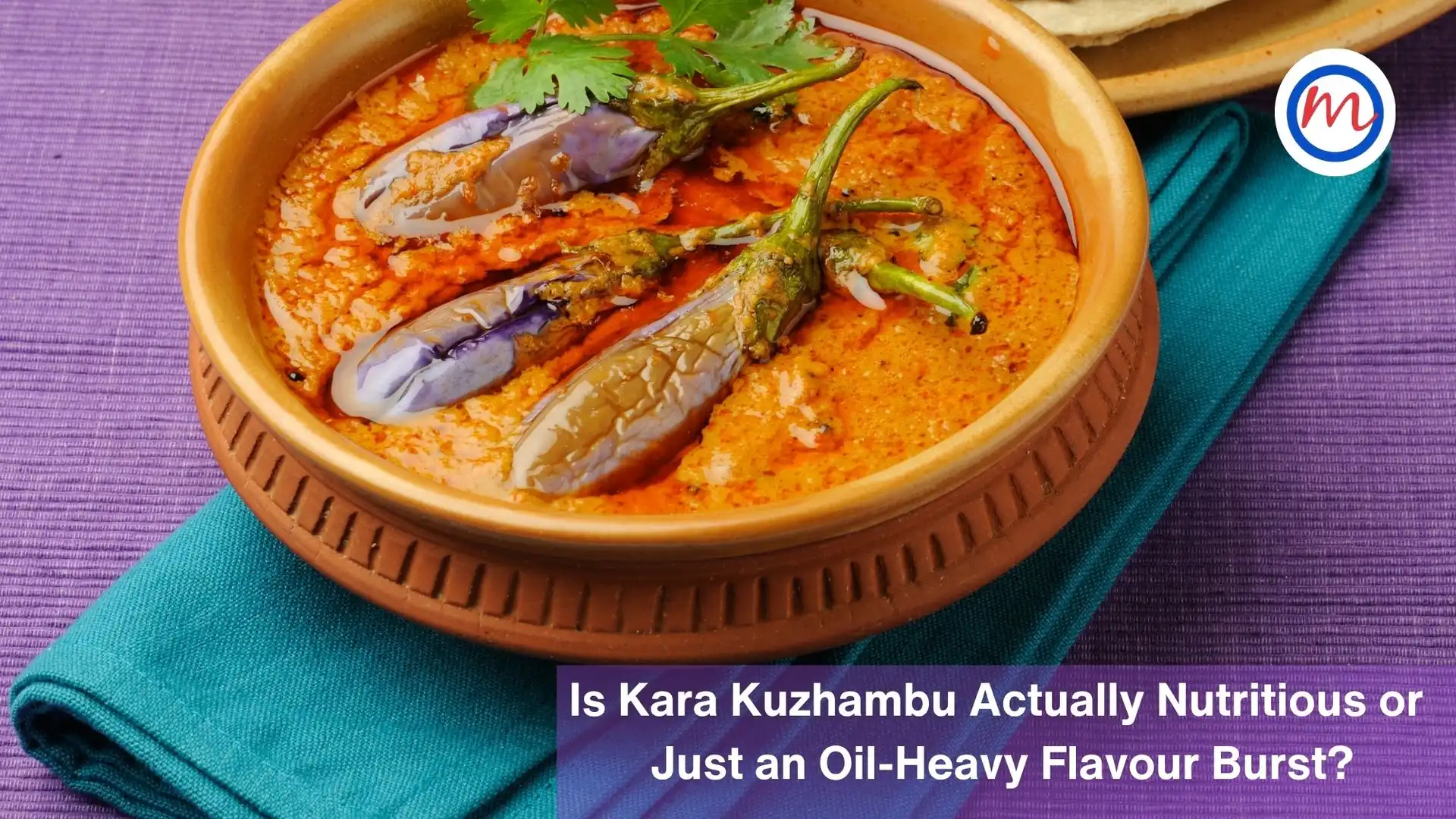
Kara kuzhambu is a hero in many Tamil Nadu kitchens—bold, spicy, tangy, and satisfying with just a small amount of rice. Because it is packed with tamarind, spices, and vegetables, many assume it is automatically healthy.
But depending on how it is cooked, kara kuzhambu can swing between being a nutrient-rich traditional curry and an oil-heavy flavour bomb.
Let’s break it down.
Is Kara Kuzhambu Healthy?
- Uses antioxidant-rich ingredients
Tamarind, garlic, curry leaves, mustard and fenugreek are all packed with antioxidants that support immunity and digestion.
- Naturally low in carbohydrates
The gravy itself has very few carbs, making it lighter than many other curries.
- Can include fibre-rich vegetables
Drumstick, brinjal, ladies’ finger, broad beans, onions and tomato all add vitamins and fibre when used generously.
- Tamarind supports digestion
The natural acids in tamarind help stimulate digestive juices and improve metabolism.
Kara kuzhambu has every reason to be healthy—if prepared the right way.
Where Kara Kuzhambu Becomes Oil-Heavy
- Tempering with too much oil
Recipes often start with 3–4 tablespoons of oil for sautéing onions, garlic, spices and vegetables. This alone increases calories significantly.
- Thickening with masala + oil
Ground masala pastes often need additional oil to cook, adding more hidden fat.
- Absorbing oil into vegetables
Brinjal, okra and onions soak up oil like a sponge, adding to the total fat content.
- Oversalted versions increase appetite
Excess salt makes you eat more rice, indirectly raising overall calories.
So the dish feels light and tangy… but may be richer than you imagine.
How to Make Kara Kuzhambu Healthy (Without Losing Taste)
- Reduce oil to 1–1½ teaspoons
Use a non-stick or cast-iron pan to sauté without burning. - Use more vegetables
Drumstick, pumpkin, brinjal, peas and broad beans add volume and nutrients. - Add a tablespoon of cooked toor dal
This gives thickness, reduces the need for oil, and adds protein. - Roast spices dry
Skip oil-heavy masala roasting; dry roasting enhances flavour. - Use minimal jaggery (optional)
A tiny pinch balances taste without increasing calories much.
Healthy Kara Kuzhambu Recipe (Low-Oil Version)
Ingredients
- Tamarind extract – 1 cup (medium thick)
- Brinjal – 2 small (cubed)
- Drumstick – 1
- Tomato – 1
- Onion – 1 small
- Garlic – 6 cloves
- Sambar powder – 1½ teaspoons
- Turmeric – ¼ teaspoon
- Oil – 1 teaspoon
- Mustard, curry leaves, methi (few seeds)
- Salt – to taste
Method
- Heat 1 teaspoon oil, add mustard, curry leaves, garlic and onions.
- Add vegetables and sauté lightly without burning.
- Pour tamarind extract, add turmeric, sambar powder and salt.
- Simmer until vegetables soften and the kuzhambu thickens.
- Serve warm with rice or millets.
Approximate Nutritive Value (1 ladle / 100 ml)
- Calories: ~70 kcal
- Carbohydrates: 7 g
- Protein: 2 g
- Fat: 3 g
- Fibre: 2 g
To know more: https://drmohans.com/
Click to book an appointment: https://drmohansdiabetes.co.in/enroll/?campname=website
Is Kara Kuzhambu Healthy When Made at Home vs. Restaurant Style?
A major factor that decides is Kara Kuzhambu healthy is where and how it is prepared. Home-made versions typically use smaller amounts of oil, freshly ground spices, and a balance of vegetables and dals. This keeps the calorie load moderate and improves the dish’s fibre and mineral profile.
Restaurant-style Kara Kuzhambu, however, often contains 3–4 tablespoons of oil, commercial masalas high in sodium, and very limited vegetables. This significantly increases the saturated fat and salt levels, making it less suitable for individuals with diabetes, high blood pressure, or those trying to lose weight.
Is Kara Kuzhambu Healthy for Individuals with Diabetes?
Many people wonder is Kara Kuzhambu healthy for individuals with diabetes. The answer depends on portion control and side dishes. When paired with brown rice, hand-pounded rice, millet rice, or chapathi, the overall glycaemic load reduces. Including plenty of vegetables such as brinjal, drumstick, okra, or pumpkin can further slow digestion and stabilise blood sugar levels.
However, avoiding large quantities of tamarind is important for individuals experiencing acidity or reflux. Using small onions, adding a little turmeric, and including a source of protein like toor dal can make Kara Kuzhambu more balanced and suitable for everyday meals.
Is Kara Kuzhambu Healthy for Weight Loss Diets?
Many people trying to lose weight often ask, is Kara Kuzhambu healthy when they are on a calorie-restricted diet. The good news is that Kara Kuzhambu can fit into a weight-loss plan if the oil is reduced and vegetables are increased. The dish is naturally low in carbohydrates and gets most of its flavour from spices rather than high-calorie ingredients. Adding vegetables like brinjal, drumstick, or chow-chow boosts fibre, helping you feel full with fewer calories. If you avoid deep-fried vadagams and limit ghee on the side, Kara Kuzhambu becomes a naturally satisfying, low-calorie meal option.