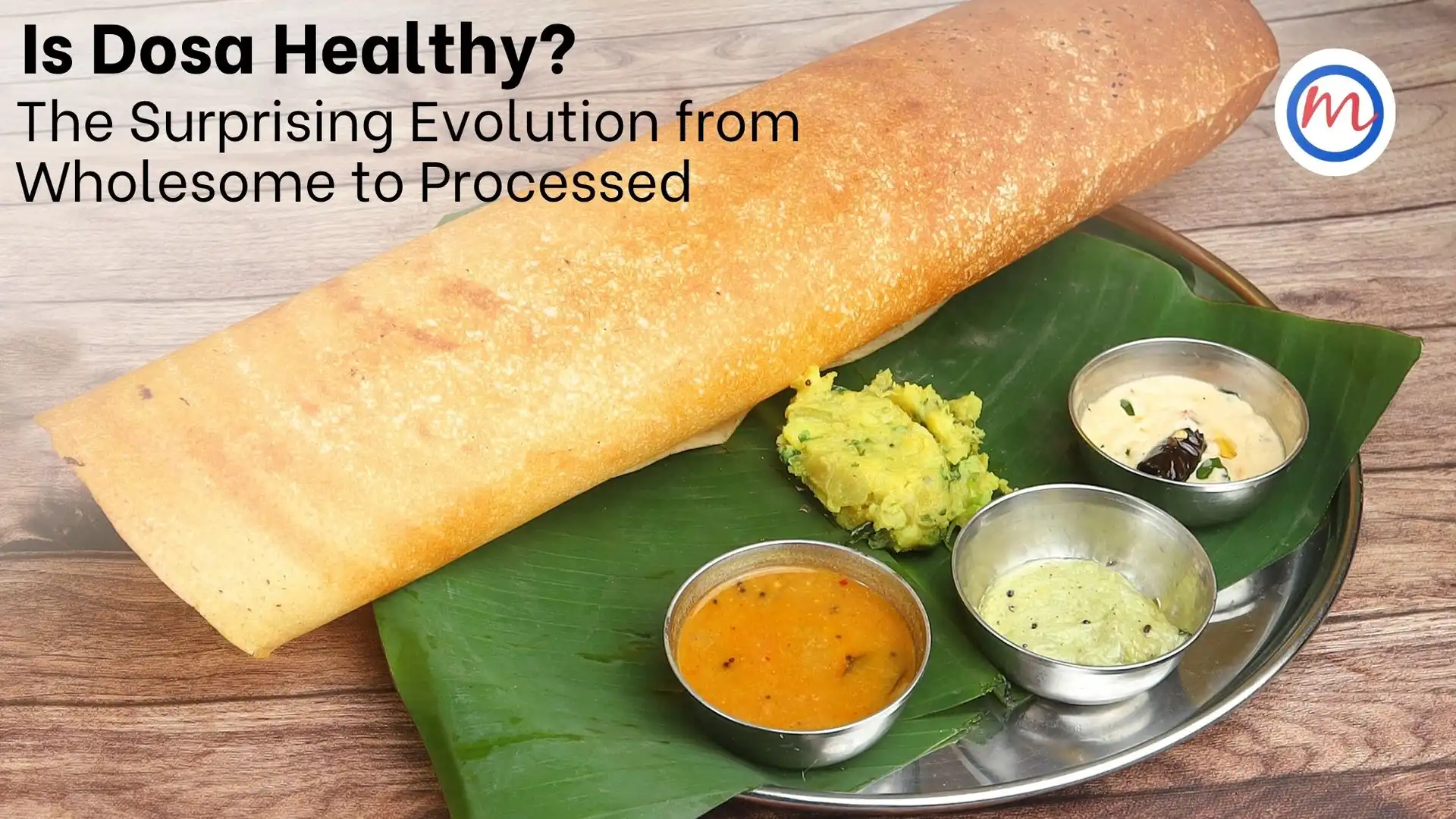
Is Dosa Healthy? The Surprising Evolution from Wholesome to Processed
Dosa has always been more than just a breakfast item — it is a tradition passed down through generations in South India. Light, crisp, and nourishing, the original dosa was made from a fermented batter of parboiled rice and urad dal, cooked with a little oil, and served with sambar and chutney. But over the years, this healthy staple has undergone a quiet transformation.
In today’s fast-paced world, many people rely on ready-made dosa mixes, instant batters and refined white rice versions that prioritise convenience over nutrition. These modern shortcuts strip away much of dosa’s natural fibre, protein, and probiotic benefits. The lack of proper fermentation and the use of baking soda or preservatives can also affect digestion and blood sugar balance.
Moreover, the way dosa is served has evolved — butter dosas, cheese dosas, and deep-fried masala dosas are now more common than the plain, balanced version. These variations, though delicious, often contain excess oil, salt and calories, making them less suitable for people aiming for healthy eating or better blood sugar control.
Yet, dosa can easily return to its nutritious roots. By using whole grains, millets, or oats and following traditional fermentation, it can once again become a fibre-rich, low-glycemic index meal that supports gut health and sustained energy.
Healthy Idea:
Try a foxtail millet dosa instead of white rice dosa — it is richer in fibre, minerals and antioxidants, and helps in maintaining steady blood sugar levels.
Recipe: Foxtail Millet Dosa
Ingredients:
- Foxtail millet – 1 cup
- Urad dal – ½ cup
- Fenugreek seeds – ¼ tsp
- Salt – to taste
Method:
- Soak millet, dal, and fenugreek for 4–5 hours.
- Grind to a smooth batter; ferment overnight.
- Spread thin on a tawa and cook with minimal oil.
Approximate Nutritive Value (per dosa):
- Energy: 120 kcal
- Protein: 4 g
- Carbohydrates: 22 g
- Fat: 2 g
- Fibre: 3 g
To know more: https://drmohans.com/
To book an appointment: https://drmohansdiabetes.co.in/enroll/?campname=website
How Cooking Methods Affect the Answer to ‘Is Dosa Healthy’?
Many people overlook how cooking technique changes the nutritional value of dosa. Even with the same batter, the way you cook it plays a major role in determining is dosa healthy for everyday consumption. A thin, lightly greased dosa cooked on a well-seasoned cast-iron tawa keeps calories moderate while retaining its crisp texture. But when restaurants drizzle oil or ghee repeatedly across the tawa, the fat absorbed increases significantly. This excess oil can add 50–100 calories per dosa, making the dish heavier and altering the health equation.
Another factor is reheated oil, commonly used in busy food outlets. Reheated oil contains harmful compounds that are not supportive of heart health. Therefore, even if the batter is nutritious, the cooking method influences how confidently we can say is dosa healthy in a restaurant setting.
Fermentation: A Key Factor in Deciding ‘Is Dosa Healthy?’
Fermentation is the heart of a traditional dosa. When allowed to ferment naturally, the batter produces beneficial bacteria that enhance gut health, improve digestion and increase the bioavailability of nutrients. These probiotics make dosa lighter on the stomach and help regulate blood sugar levels more efficiently.
But modern shortcuts often skip this step. Instant dosa mixes or pre-made batters stored for days lack proper fermentation. Without this process, the digestibility and nutritional value drop, affecting how we answer the question is dosa healthy. Fermentation also reduces antinutritional factors in urad dal, making minerals easier to absorb. So a traditionally fermented dosa is far superior.
Blood Sugar Impact: Is Dosa Healthy for Individuals Watching Carbohydrates?
Many individuals wonder is dosa healthy for those trying to maintain stable blood sugar. Traditional dosa made with parboiled rice and urad dal has a moderate glycaemic index. When eaten with protein-rich sambar or fibre-rich vegetable chutneys, it releases energy gradually. However, dosa made solely from polished white rice without dal can cause quicker sugar spikes.
Millet dosas — such as ragi dosa or kuthiraivali dosa — offer a healthier alternative. They are lower in glycaemic load, higher in fibre and ideal for sustained energy. So the answer to is dosa healthy depends on the version and the grain used.
Portion Size: The Final Factor That Decides ‘Is Dosa Healthy’
Even a nutritious food becomes unhealthy when eaten in excess. A single dosa with chutney forms a balanced meal, but eating multiple giant restaurant-style dosas stacked with butter, cheese or masala can lead to overeating. Smart portion size, mindful toppings and healthier sides ensure that the answer to is dosa healthy stays positive.