Is Coconut Rice Really a Light Lunch? Rethinking This Comfort Favourite
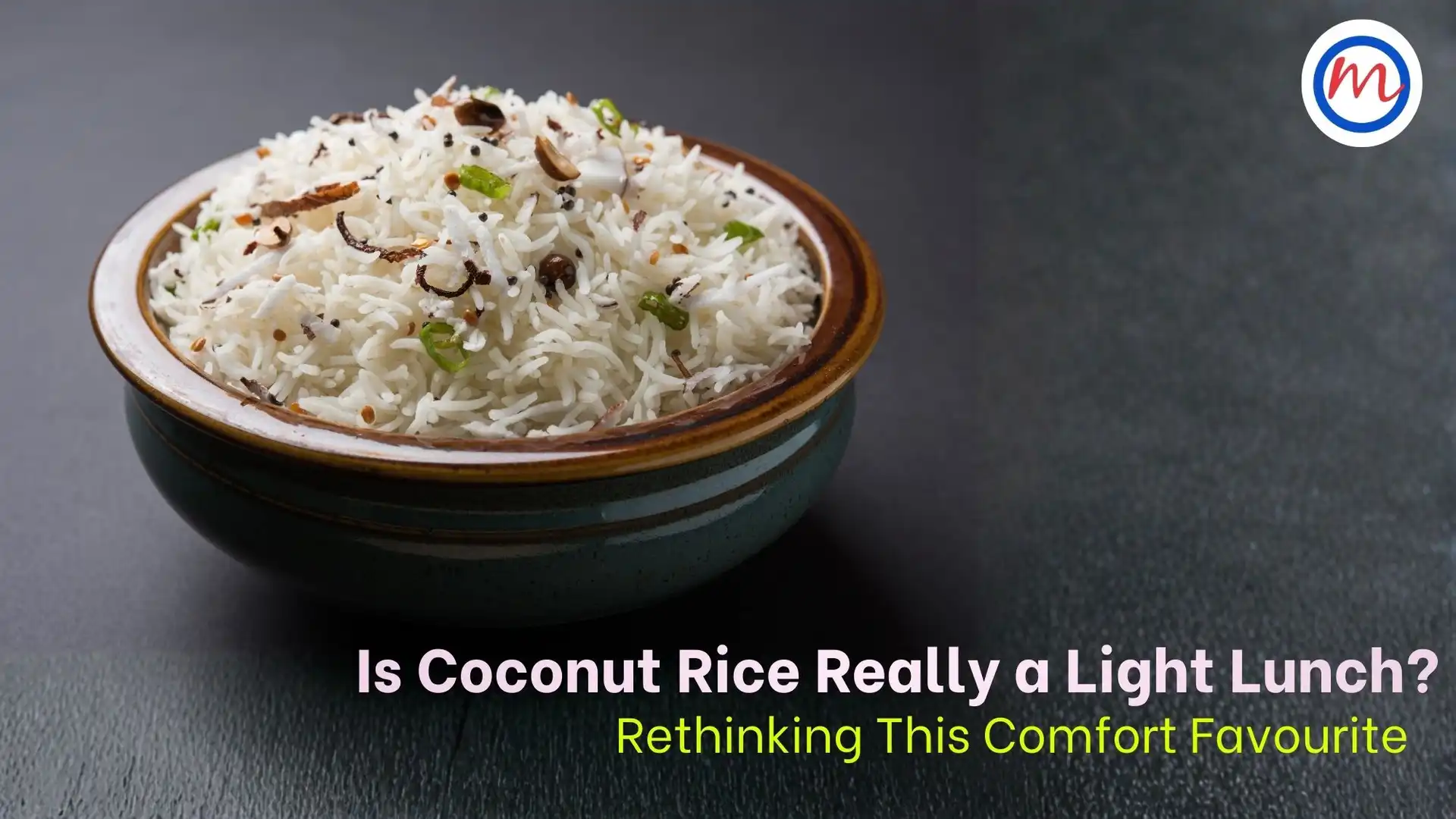
Coconut rice has a reputation for being a “light but tasty” lunch—something you pack on lazy days or when you want a simple meal without much fuss. But here’s the twist: coconut rice is not always as light as people assume. In fact, depending on how it is made, it can quietly turn into a calorie-dense lunch that keeps your blood sugars and energy levels swinging.
Why Coconut Rice Feels Light—but Isn’t Always
The dish tastes mild, so people automatically assume it must be low in calories. But the real story is in the ingredients:
- Coconut is rich in fat
Fresh coconut and coconut oil are nutritionally valuable, but they are high in calories. A simple “one handful” of grated coconut adds more fat than you expect. - White rice base
Most coconut rice is made with polished white rice, which is quickly digested and leads to higher blood sugar spikes. The flavour is mild, but the glycaemic impact is not. - Oil + Tempering tricks
Temperings often include 1–2 tablespoons of coconut oil or refined oil, channa dal, urad dal, cashews and mustard seeds. All great for flavour—but they add more calories than people realise.
By the time the plate reaches the table, what feels “light” is often a high-calorie, high-fat meal.
A Healthier Twist: Make It Truly Light lunch
Here’s how to enjoy coconut rice without the calorie shock:
- Switch to semi-polished or brown rice to retain fibre and improve satiety.
- Reduce coconut quantity slightly; replace half with grated carrot or bottle gourd for volume.
- Use minimal amounts of oil—1 teaspoon is enough for tempering.
- Add protein: Toss in steamed green gram, roasted peanuts (small quantity), or cubes of firm tofu.
- Serve with a fibre-rich side like vegetable kootu or a cucumber salad to slow digestion.
These tweaks keep the flavour intact but make it genuinely light.
Healthy Coconut Rice Recipe (Improved Version)
Ingredients
- Brown rice – ½ cup
- Grated coconut – 2 tablespoons
- Green gram dal (soaked & steamed) – 2 tablespoons
- Coconut oil – 1 teaspoon
- Mustard seeds – ½ teaspoon
- Urad dal – 1 teaspoon
- Curry leaves – few
- Green chilli – 1
- Salt – to taste
Method
- Cook the rice with slightly less water so the grains remain separate.
- Heat coconut oil, add mustard seeds, urad dal, chilli and curry leaves.
- Add the steamed green gram.
- Add grated coconut and mix on low flame.
- Toss in the cooked rice and mix gently.
Approximate Nutritive Value (Per Serving)
- Calories: ~260 kcal
- Carbohydrates: 35 g
- Protein: 6 g
- Fat: 9 g
- Fibre: 3 g
To know more: https://drmohans.com/
Click to book an appointment: https://drmohansdiabetes.co.in/enroll/?campname=website
Coconut rice has always been associated with simplicity — a quick, fragrant dish that feels light on the stomach. But to understand whether this light lunch is truly a suitable idea, you must look closely at how this beloved South Indian dish is prepared today. The traditional version used freshly scraped coconut, minimal oil, and hand-pounded rice, all of which made the meal balanced and gentle on digestion. However, modern versions often use polished white rice, generous quantities of oil, and large portions of coconut, which can quickly increase the calorie load.
A typical serving can easily cross 350–450 kcal, especially when paired with potato fry, papad, or pickles — all of which add more fat and sodium. This means that coconut rice, though comforting, may not always be the low-calorie option people imagine.
If you want to enjoy coconut rice light lunch without overloading on calories, switch to brown rice or millet rice, reduce coconut quantity, and temper with just a teaspoon of oil. Pairing it with a vegetable poriyal, kootu, or a fibre-rich salad can make the meal more balanced. With the right tweaks, coconut rice can regain its place as a satisfying yet mindful mid-day choice.