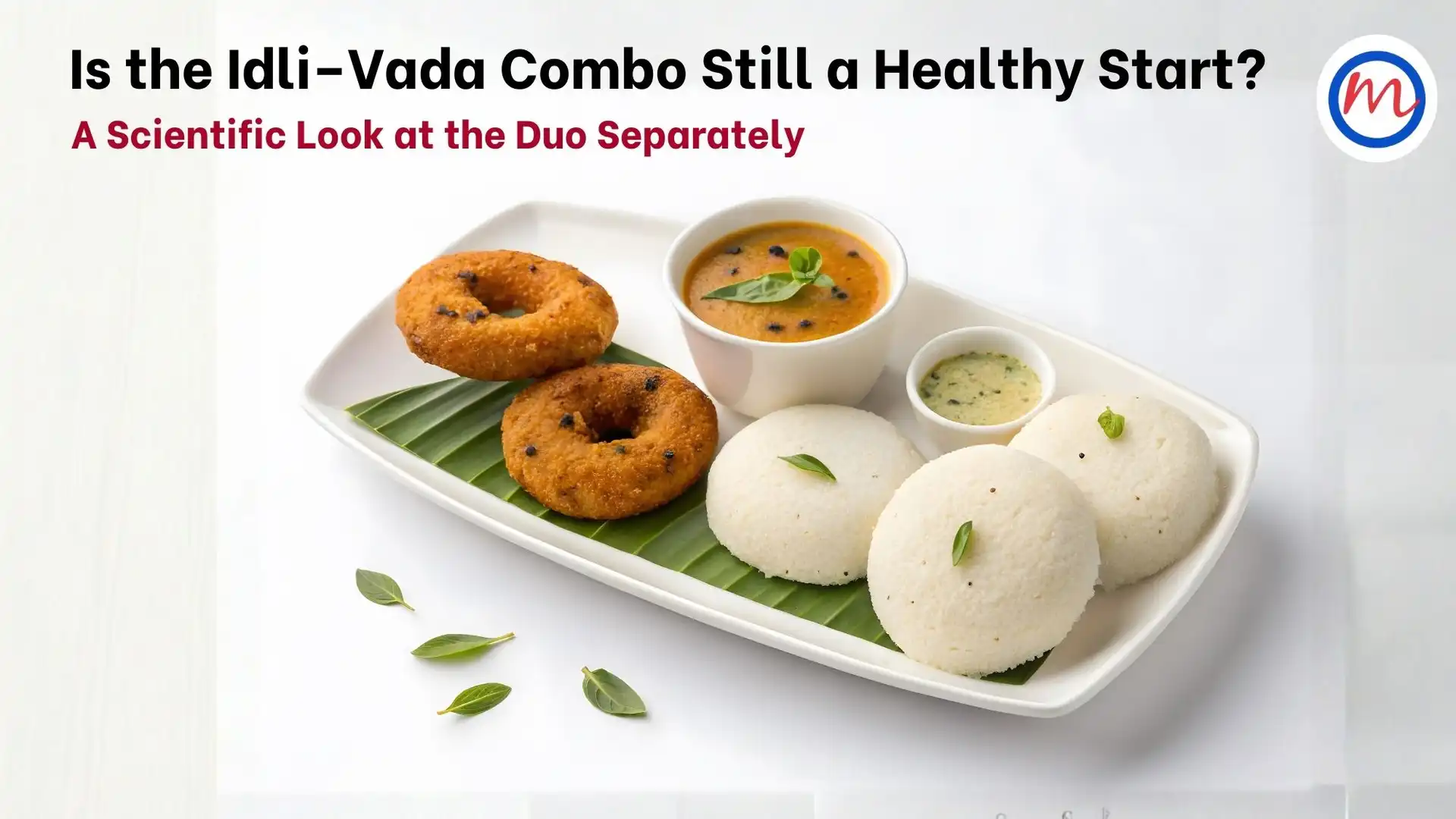
Is the Idly Vada Combo Still a Healthy Start? A Scientific Look at the Duo Separately
For decades, the idly vada combo has been the king of South Indian breakfasts. It is comforting, familiar, tasty, and found in almost every hotel—from small tiffin kadais to big restaurants.
But is this classic pair still a healthy way to start your day? To understand that, we must look at idli and vada separately, because one is angelic and the other… not so much.
Idli: Still One of the Healthiest Breakfast Foods
Idli remains a strong winner.
- Steamed, not fried
No oil. No frying. No hidden fats.
- Fermented batter
Enhances gut-friendly bacteria, aids digestion, and lowers glycaemic impact.
- Dal gives protein
Urad dal improves satiety and adds essential amino acids.
- Light but filling
Perfect for children, adults and people with diabetes when paired with sambar.
Overall, idli is still one of the best Indian breakfast choices—simple, safe, wholesome.
Vada: Crispy, Tasty… and Calorie-Heavy
Vada, on the other hand, is a different story.
- Deep fried
Even a small medu vada can absorb 1–2 tablespoons of oil, adding 120–150 calories just from fat.
- Often eaten piping hot
Freshly fried vadas retain more surface oil.
- Difficult to stop at one
Crispy foods trigger overeating easily.
- Coconut chutney increases calories further
A vada + coconut chutney combo can push the calorie count even higher.
So while a single vada is fine occasionally, it is not suitable as a daily habit.
The Real Issue: The Combo Itself
The idli–vada combination works psychologically:
- Idli is light → so people add vada for taste
- Vada is heavy → but idli makes the meal look “balanced”
This leads to a breakfast that is 50% steamed and 50% deep fried, which is not ideal for daily consumption.
A typical plate (2 idlis + 1 vada + chutney + sambar) equals 450–550 calories.
Not bad occasionally, but too heavy for an everyday routine.
How to Make the Combo Healthier
- Replace vada with sambar
2 idlis with a big bowl of vegetable sambar is the healthiest option.
- If you really want vada, choose mini vadas
Smaller vadas absorb less oil.
- Eat vada after draining excess oil
Using tissue reduces surface fat.
- Increase dal proportion in idli batter
Helps improve protein content and satiety.
- Add vegetables to sambar or chutney
Makes the entire plate more balanced.
Nutritive Value (Common Restaurant Serving)
Idli (1 piece)
- Calories: 55–60
- Carbohydrates: 11 g
- Protein: 2 g
- Fat: 0.4 g
Vada (1 medium)
- Calories: 150–180
- Carbohydrates: 12 g
- Protein: 3–4 g
- Fat: 10–12 g
Final Word
Idli is absolutely healthy.
Vada is absolutely tasty.
The combination? Enjoy it—just not every morning.
To know more: https://drmohans.com/
Click to book an appointment: https://drmohansdiabetes.co.in/enroll/?campname=website
Is the Idly Vada Combo Still a Healthy Breakfast?
The idly vada combo has always been a beloved South Indian breakfast, but with changing food habits, many wonder about its health value today. Traditionally, this combo was prepared with fermented idly batter and freshly ground urad dal for vada. While idly remains one of the healthiest steamed foods, the vada component changes the calorie load dramatically, making the idly vada combo heavier than it appears.
Idly Vada Combo Calories: What Really Happens on Your Plate
When analysing idly vada combo calories, idly alone contributes only about 35–40 kcal and contains almost no oil. In contrast, a single deep-fried vada can deliver 150–180 kcal, mainly from fat absorbed during frying. This means a simple plate of the idly vada combo can easily reach 220–260 kcal or more. If sambhar and chutney are added, the total calorie count increases slightly, but they also improve nutritional balance.
Idly Vada Combo Nutrition: The Good and the Not-So-Good
The idly vada combo offers a mix of carbohydrates, protein and fat. Idly provides fermented goodness, gut-friendly bacteria, and steady energy. The vada offers protein from urad dal but also excess fat from deep frying. When vadas are prepared using reused oil or processed dal batter, the health value declines further. Yet, with mindful preparation—fresh oil, whole dal and smaller portions—the nutritional quality of the idly vada combo improves significantly.
How to Make the Idly Vada Combo Healthier
Making the idly vada combo healthier is possible with simple changes. Choosing one idly and one mini vada instead of a full-sized vada lowers calories. Air-frying or pan-frying the vada cuts down oil. Adding vegetables like onions, carrots or spinach enhances fibre. Pairing the idly vada combo with extra sambhar boosts protein and antioxidants, balancing the plate better.
Should You Still Enjoy the Idly Vada Combo?
Yes—because the idly vada combo is not unhealthy by itself; it is the method of preparation and portion size that matter. Eating it occasionally, choosing lighter versions and adding more sambhar makes it a satisfying yet balanced breakfast choice.