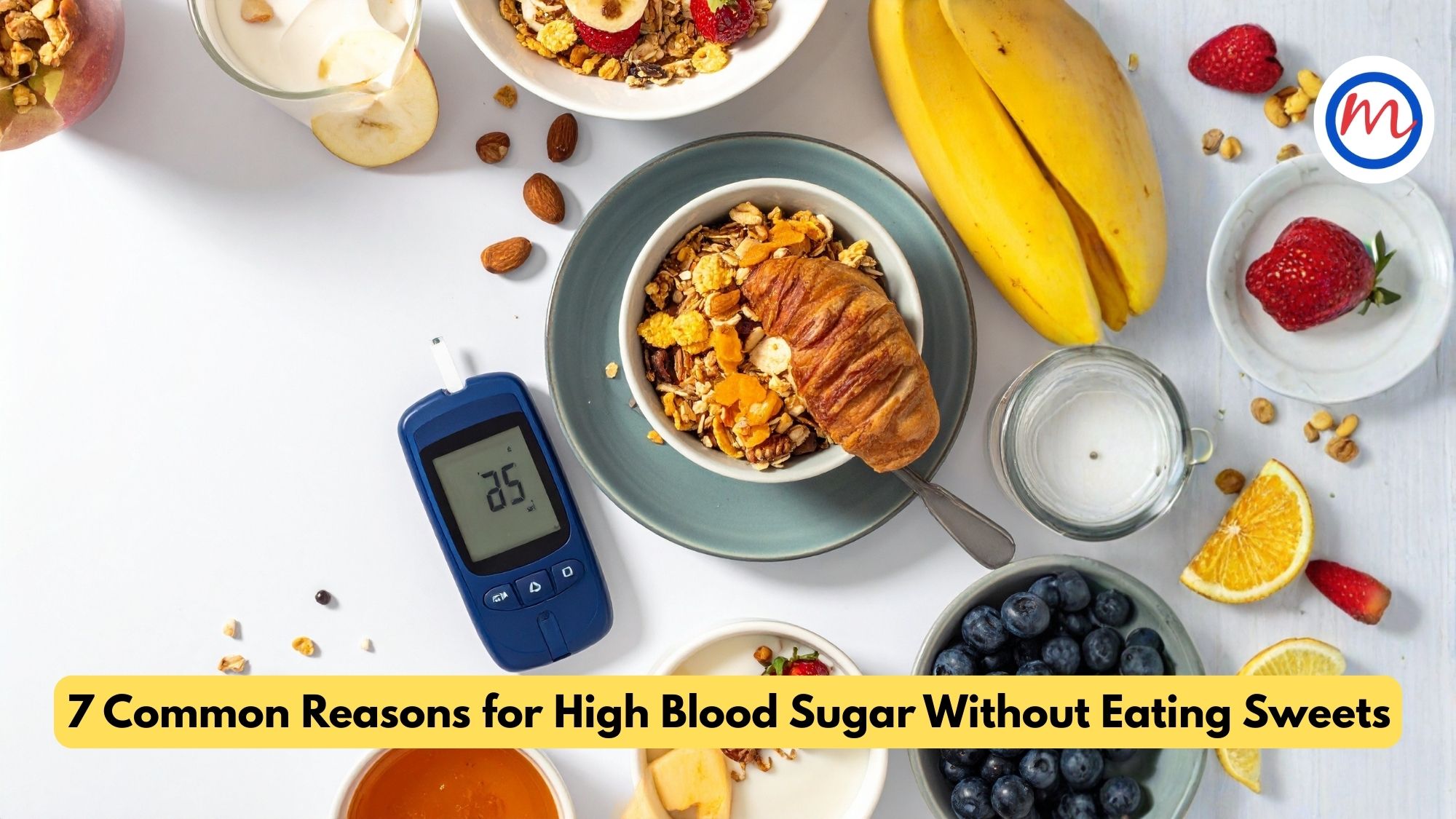
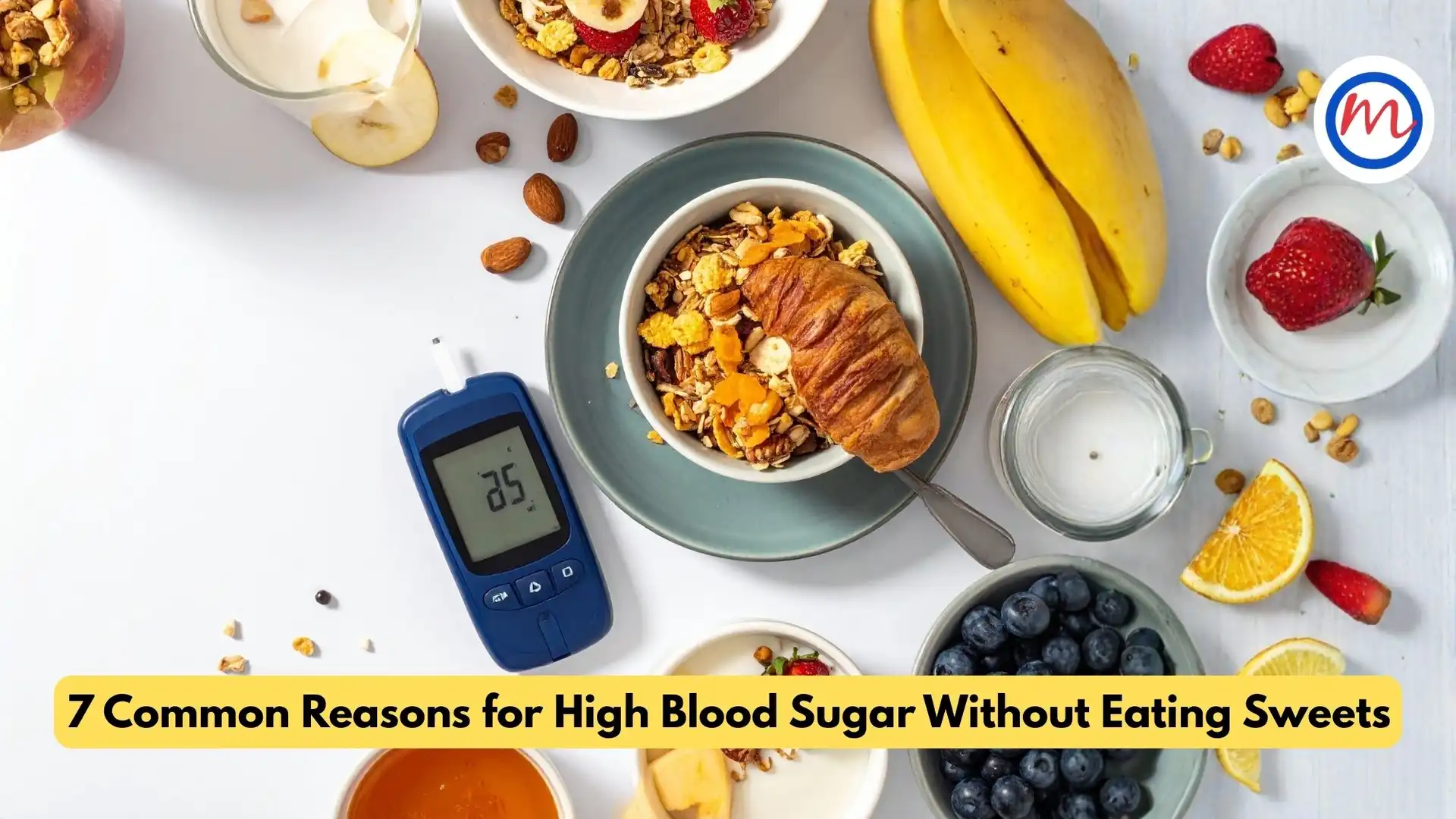
7 Common Reasons for High Blood Sugar Without Eating Sweets
High blood sugar without eating sweets is a common concern among many people who avoid sugar but still see elevated readings. Blood sugar control depends on much more than sweets alone—it is influenced by insulin resistance, physical activity, stress, and daily routines.
Many people are surprised to learn that high blood sugar without eating sweets is more common than expected and is often linked to how the body handles insulin rather than sugar intake alone.
High Blood Sugar Without Eating Sweets – Why It Happens
Many people are genuinely confused when they see high blood sugar readings despite avoiding sweets, sugar and desserts. A common response is: “Doctor, I don’t even eat sugar. How can my sugar levels be high?”
This confusion is understandable—but blood sugar control depends on much more than just sweet foods.
To understand this better, we need to talk about insulin resistance, inactivity, stress, and daily routines—all in simple terms.
Sugar in the Blood Does Not Come Only from Sweets
When we eat food, especially foods containing carbohydrates, the body breaks them down into glucose (sugar). This includes:
- Rice, chapati, bread
- Idli, dosa, pongal
- Fruits
- Milk and curd
So even if you completely avoid sweets, your body is still getting sugar from regular meals. This is normal and necessary. The problem starts when the body cannot use this sugar properly.
What Is Insulin and Why Does It Matter?
Insulin is a hormone made by the pancreas. Its job is simple:
- It helps sugar move from the blood into the muscles and cells
- This sugar is then used for energy
Think of insulin as a key and your body’s cells as locks.
When insulin works well, the key opens the lock easily, and sugar enters the cells.
What Is Insulin Resistance (In Simple Words)?
In fact, high blood sugar without eating sweets is one of the earliest signs of insulin resistance, where glucose remains in the blood despite normal or modest eating habits.
Insulin resistance happens when the body’s cells stop responding properly to insulin.
This means:
- Sugar stays in the blood instead of entering the cells
- The pancreas produces more and more insulin to compensate
- Over time, blood sugar levels start rising
This can happen even if you don’t eat sweets.
Why Inactivity Raises Blood Sugar
Our muscles are the biggest users of sugar in the body.
When muscles are active, they absorb sugar efficiently—even with less insulin.
But today, many people:
- Sit for long hours at work
- Use phones, laptops and televisions extensively
- Walk very little
- Exercise irregularly or not at all
When muscles are inactive:
- Sugar is not used properly
- Insulin becomes less effective
- Blood sugar levels rise quietly over time
You may feel “normal,” but internally, sugar handling is becoming inefficient.
How Stress Affects Blood Sugar
Stress is another hidden reason for high sugar levels.
When you are stressed:
- The body releases stress hormones like cortisol and adrenaline
- These hormones raise blood sugar to prepare the body for “fight or flight”
Chronic stress—from work pressure, financial worries, poor sleep or emotional strain—can keep blood sugar elevated even if food intake is controlled.
Stress-related high sugar often surprises people because it has nothing to do with eating habits.
Irregular Routines Disrupt Sugar Control
Blood sugar likes routine.
Problems arise when there is:
- Skipping meals
- Eating late at night
- Irregular sleep
- Frequent snacking
- Long gaps followed by large meals
Such patterns confuse the body’s insulin response.
Even healthy foods, when eaten at the wrong time or in excess, can cause sugar spikes.
Why “Normal Weight” Does Not Always Mean “Normal Sugar”
Many people believe diabetes happens only in overweight individuals. This is not true.
Some people:
- Have normal body weight
- Eat modestly
- Still develop high blood sugar
This often happens due to:
- Low muscle mass
- Higher belly fat (even if weight is normal)
- Long-term inactivity
- Family history
In these cases, the problem is not excess food, but poor sugar utilisation.
Early Signs Are Often Missed
Insulin resistance develops silently. Early signs may include:
- Fatigue after meals
- Increased belly fat
- Slight rise in triglycerides
- Fatty liver
- Normal fasting sugar but high post-meal sugar
By the time fasting sugar becomes abnormal, insulin resistance has usually been present for years.
What Can You Do If You Don’t Eat Sweets but Sugar Is High?
The solution is not stricter food restriction alone. It requires a broader approach:
- Move More
- Walk daily
- Avoid sitting continuously for long hours
- Include light strength or resistance exercises if possible
- Eat Regularly
- Do not skip meals
- Avoid very late dinners
- Keep portions moderate
- Manage Stress
- Improve sleep
- Practice relaxation techniques
- Address emotional stress where possible
- Focus on Balance, Not Elimination
- Combine carbohydrates with protein and vegetables
- Avoid repeated snacking
- Watch portion sizes
- Monitor and Review
- Check fasting and post-meal sugar levels
- Do not ignore borderline values
- Seek timely medical guidance
The Key Takeaway
High blood sugar is not caused by sweets alone.
It is often the result of insulin resistance driven by inactivity, stress, irregular routines and long-term lifestyle patterns.
Understanding this helps remove guilt and confusion. Diabetes care is not about punishment—it is about awareness, balance and consistency.
When the body is supported with movement, routine and mindful eating, blood sugar control becomes more achievable—even without extreme dietary restriction.
High blood sugar without eating sweets is a common and often misunderstood problem. Many people assume that avoiding sugar alone will prevent diabetes, but high blood sugar without eating sweets is usually driven by insulin resistance, inactivity, stress, and irregular daily routines. Understanding why high blood sugar without eating sweets occurs helps individuals focus on movement, balanced meals, regular timing, and stress management rather than unnecessary food restriction. Addressing these factors early can improve long-term blood sugar control and prevent complications.
To know more: click: https://drmohans.com/
Click to book an appointment: https://drmohansdiabetes.co.in/enroll/?campname=website