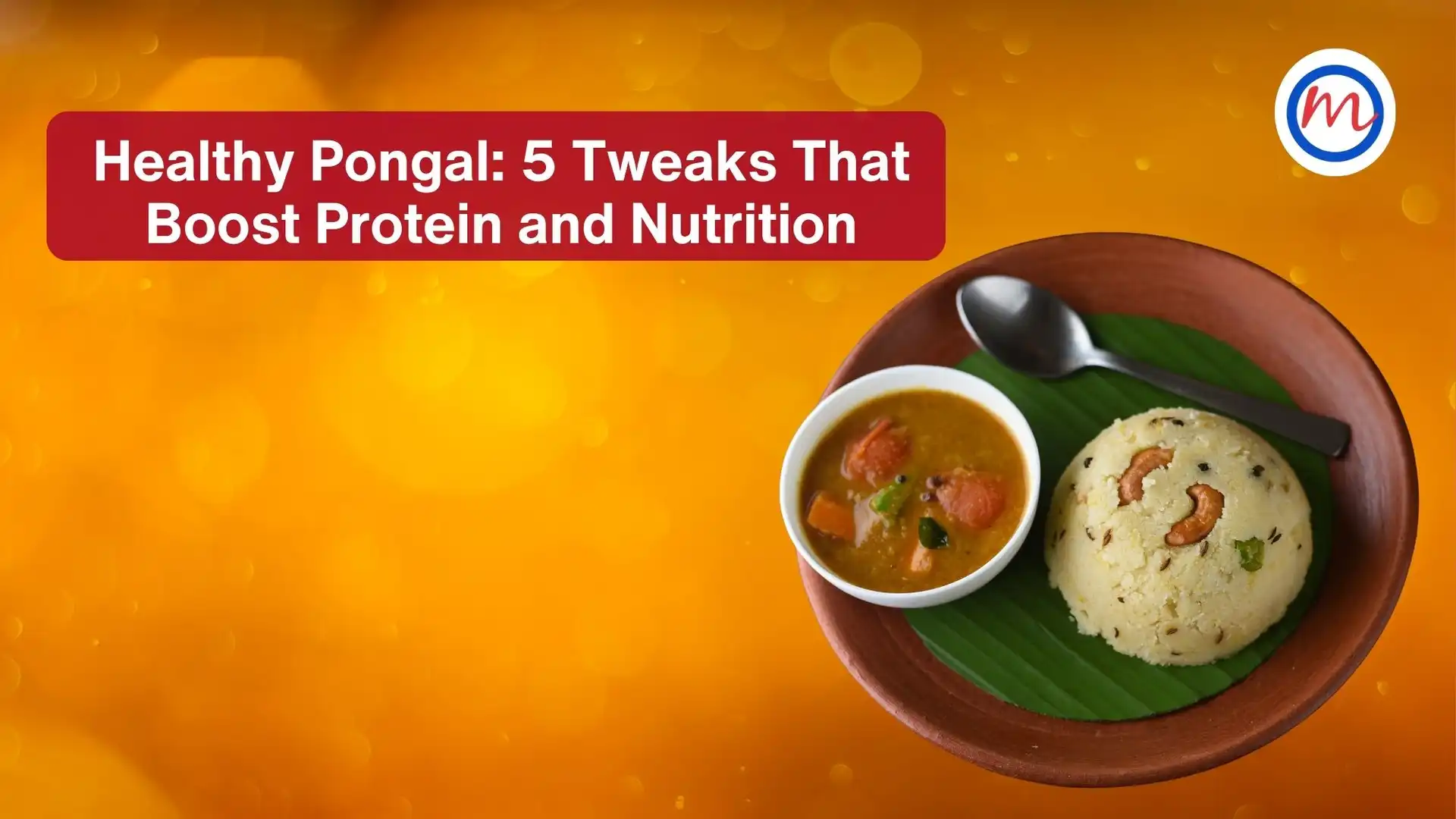
Pongal may be known as a warm, soothing comfort dish, but when prepared thoughtfully, it transforms into a healthy Pongal that is high in protein, easy to digest and suitable even for individuals with diabetes. Traditionally made with rice and moong dal and tempered with pepper, cumin and ghee, Pongal is simple, nourishing, and deeply satisfying. However, small changes in the ingredient ratio can significantly improve its nutritional quality.
Why Healthy Pongal Is Better Than the Regular Version
Most homemade Pongal uses a rice-heavy ratio. This makes it comforting but also increases the carbohydrate load. A healthy Pongal balances rice and moong dal equally, instantly improving the protein content and reducing the glycaemic impact. Moong dal is rich in plant protein, antioxidants, and is gentle on digestion, making it ideal for children, adults, and older people.
Key Health Benefits of Healthy Pongal
A well-prepared healthy Pongal offers several nutritional advantages:
-
Higher protein: The equal rice–dal ratio supports muscle repair and keeps you full longer.
-
Better digestion: Moong dal is soothing for the gut and reduces bloating.
-
Anti-inflammatory spices: Pepper, cumin and ginger help immunity and digestion.
-
Diabetes-friendly twist: Replacing part of the rice with millets or broken wheat can further lower glycaemic response.
Healthy Idea: Increase the Dal Ratio
Switch from the usual 3:1 rice-to-dal proportion and use 1:1 instead.
This simple change boosts protein, improves satiety and supports better blood sugar control.
(You can insert an internal link here to any Dr. Mohan’s diabetes-friendly recipe page.)
Recipe: High-Protein Healthy Pongal
Ingredients
-
Raw rice – ½ cup
-
Moong dal – ½ cup
-
Ginger (grated) – 1 tsp
-
Peppercorns – ½ tsp
-
Cumin seeds – ½ tsp
-
Ghee – 2 tsp
-
Curry leaves – few
-
Salt – to taste
-
Water – 3 cups
Method
-
Dry roast the moong dal until it becomes aromatic.
-
Wash and cook the rice and dal together with water until soft and creamy.
-
Heat ghee and temper cumin, pepper, ginger and curry leaves.
-
Add the tempering to the cooked mixture and serve the healthy Pongal hot.
Approximate Nutritive Value (Per Serving)
-
Energy: 220 kcal
-
Protein: 9 g
-
Carbohydrates: 32 g
-
Fat: 6 g
-
Fibre: 3 g
Know more: https://drmohans.com/
To book an appointment: https://drmohansdiabetes.co.in/enroll/?campname=website
How to Make Healthy Pongal Even More Nutritious
While the classic Pongal is comforting, there are several easy ways to boost the nutrition and make it a healthy Pongal suitable for everyday meals. One of the simplest methods is to add more vegetables. Carrots, beans, peas, spinach, or bottle gourd can be chopped finely and cooked along with the rice and dal. Vegetables increase fibre, vitamins, and minerals, making the meal more balanced and helping maintain steady blood sugar levels.
Another great tip is to replace part of the rice with millets or broken wheat. Millets like foxtail millet, little millet, or even quinoa provide additional protein, fibre, and micronutrients. This substitution slightly changes the texture but dramatically improves the health profile, making your Pongal ideal for adults, children, and people managing diabetes.
Using minimal ghee for tempering is another smart trick. While ghee adds flavour, aroma, and some healthy fats, reducing it to just a teaspoon or two keeps calories in check without sacrificing taste. You can also increase the proportion of dal to rice—equal parts dal and rice give more protein, enhance satiety, and reduce the glycaemic load, which is especially important for maintaining energy throughout the day.
For spice, a combination of ginger, cumin, and pepper not only adds warmth and aroma but also improves digestion and has anti-inflammatory benefits. You can experiment by adding a few curry leaves or a pinch of turmeric for added antioxidants.
Finally, pairing your healthy Pongal with sambar or curd makes it a complete, balanced meal. The probiotics in curd aid gut health, while sambar adds extra protein and vitamins. By making these small tweaks, Pongal stops being just a comfort food and becomes a truly nourishing, everyday meal.