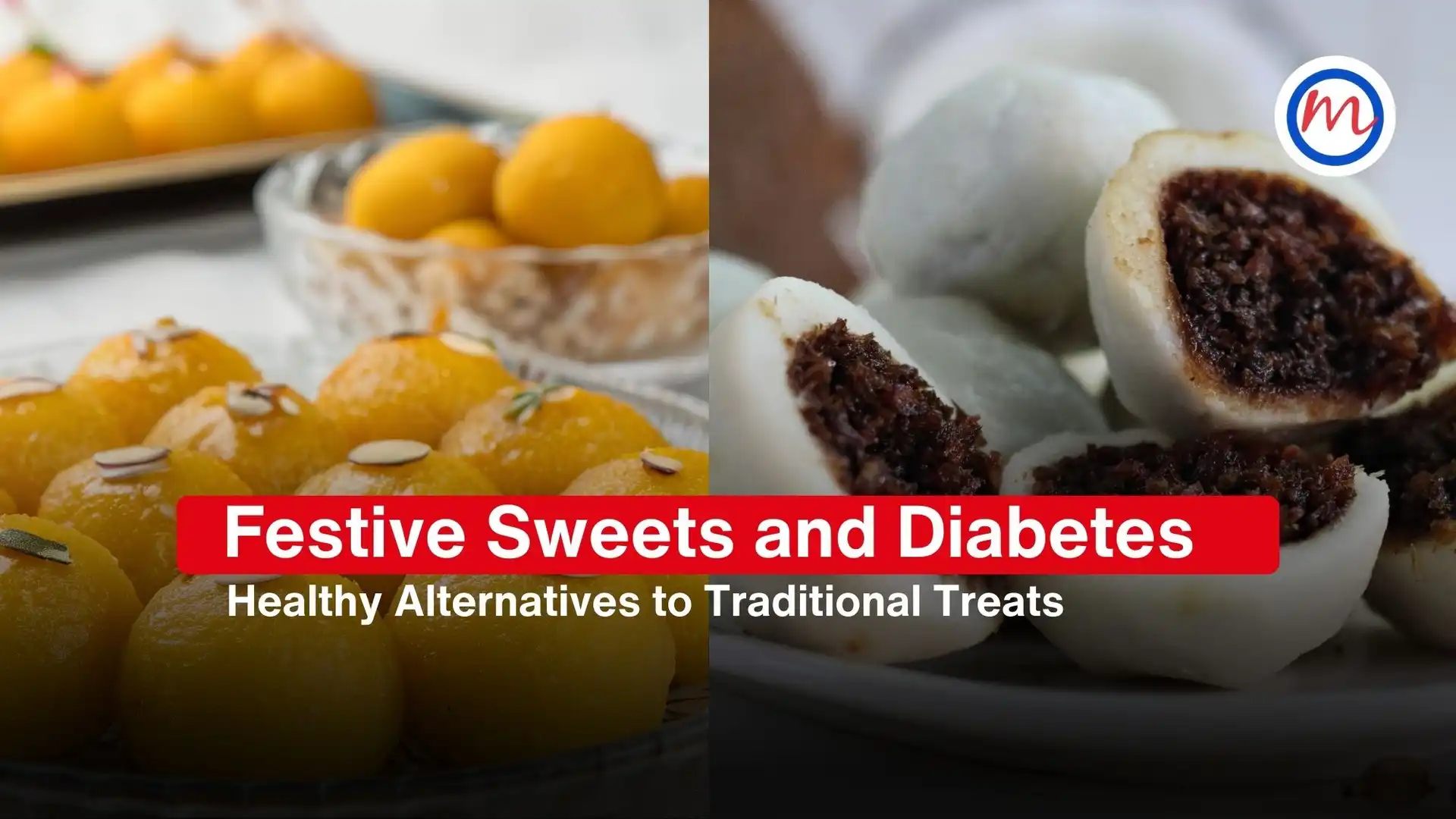
Festive Sweets and Diabetes – Healthy Alternatives to Traditional Treats
Festivals and celebrations are an inevitable part of Indian life. They are filled with prayer, family gatherings, music, dance, and of course, food. Sweets, snacks and a grand meal are an integral part of any festival in India. Sweets like laddoos, jalebis, payasam and kozhukattai are common and preferred in celebrations. But, for people with diabetes, these tasty dishes can be dangerous, as they are rich in sugars, sweets, refined carbs and fats. The good news is that people with diabetes need not avoid sweets completely. By choosing smarter options, practising portion control, and making small recipe changes, they can enjoy their sweets without any fear or guilt.
Why Traditional Sweets Pose a Challenge
Most of our festive sweets are made of white sugar, maida, ghee, butter and milk. These ingredients cause very sharp rises in blood sugar. When you eat them in large quantities, sweets can increase HbA1c levels and lead to weight gain, abnormal cholesterol levels and increased risk of diabetes-related complications. For people who already live with diabetes, enjoying these foods in the traditional way can create challenges in keeping blood sugar stable.
Smart Sweet Swaps for People with Diabetes
Healthy recipes do not mean compromising on the taste.
Here are some swaps that work well during the festive season:
- Steamed Kozhukattai– Instead of deep-fried versions, steamed kozhukattai made with rice flour, offers the same festive feel with fewer calories and no excess oil. Try to make spicy kozhukattai instead of adding jaggery.
- Fruit-Based Desserts – Fruits provide a natural sweetness to any dish. So, instead of sugar, add fruit pulp or cut fruits. Natural fruits bring sweetness along with fibre, vitamins, and minerals. Add the fruits to Payasam, Kheer and halwas to make it sweet and nutritious.
- Low-Sugar Kheer or Payasam – Replace white sugar with alternative sweeteners. Be conscious of the recommended daily intake limits of the artificial sweeteners. Add fibre-rich grains like oats or millets instead of semiya or maida to make it diabetes friendly.
- Dry Fruit Laddoos – Use dry fruits like dates, figs or raisins for sweetening Laddoos, and combine along with nuts like walnuts, almonds or pistachios and seeds like cucumber seeds or flax seeds for a crunchy texture. They provide proteins and healthy fats while reducing the need for refined sugar.
- Portion-Sized Barfis – Take a small cube of barfis to feel satisfied. Avoid large portions, which can increase the sugar.
Practical Tips for Enjoying Sweets
- Never eat sweets along with heavy meals. Having a small portion between 2 balanced meals slows down sugar absorption.
- Practise portion control. Do mindful eating. Chew a small portion of the sweet and enjoy every small bite completely.
- Balance sweets with activity. A short walk for 10 minutes after a meal can reduce high sugar spikes.
- Combine with protein. Eating a sweet with nuts or a glass of milk reduces sugar spikes.
Conclusion
Festivals are not only about family gatherings and fun. It is also about enjoying your sweets with mindful eating practice. People with diabetes can also enjoy food without any guilt or fear. By making healthier choices, reducing sugar, and controlling portions, festive celebrations can remain delicious and safe.
For More:
Visit us: https://drmohans.com/
For Appointment: https://drmohansdiabetes.co.in/enroll/?campname=website