
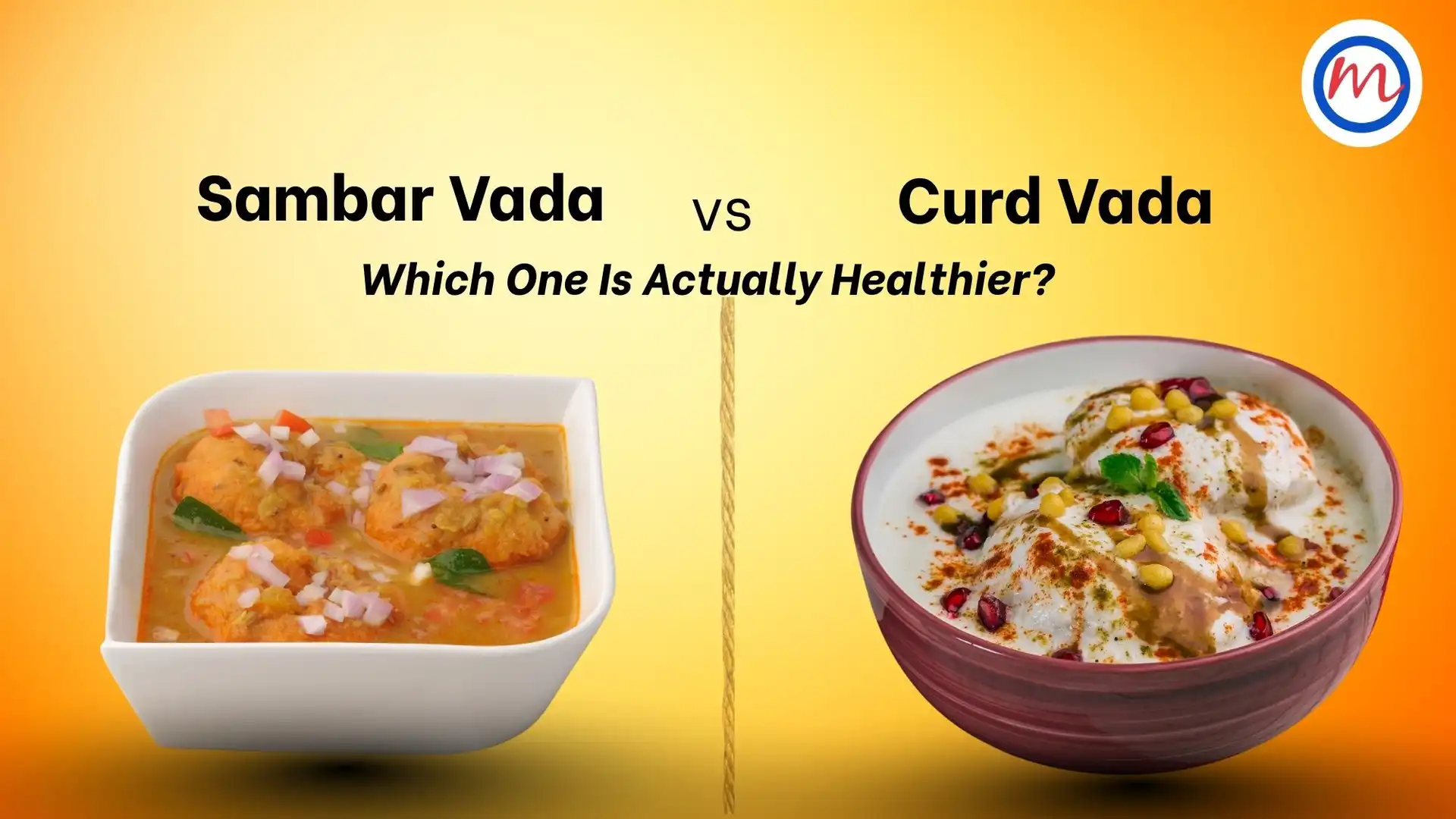
Curd Vadai vs Sambar Vadai: 7 Powerful Truths to Know Before Choosing the Healthier Option
Curd Vadai vs Sambar Vadai: Understanding the Basics
When comparing both vada, the health difference begins with their preparation. Both are deep-fried vadai made from urad dal, but the toppings and accompaniments change their nutritional value. Dahi vadai is soaked in thick curd, often topped with boondi, while sambar dipped vadai is soaked in hot sambar filled with spices and vegetables. This simple variation alters calories, fat absorption, sodium, and digestion.
Curd Vadai vs Sambar Vadai: Calorie and Nutrition Comparison
Sambar vadai usually wins on calorie control. Curd vadai contains curd, which is healthy, but the thickness of curd, sugar added in some regions, and boondi topping can increase calories and fat. A medium curd vadai can reach 250–300 kcal.
Sambar vadai, however, absorbs hot liquid sambar, making it softer and reducing the heaviness of the fried vada. The lentils, vegetables, and spices in sambar provide fibre, antioxidants, and better digestion support. A medium sambar vadai is usually 180–220 kcal, making it a lighter choice.
Curd Vadai vs Sambar Vadai: Which One Supports Better Digestion?
From a gut-health perspective, both has two sides. Curd contains probiotics that support digestion and cool the stomach. But if the curd is too thick or cold, it can slow digestion after a fried vadai.
Sambar vadai, being warm and spice-rich, stimulates digestion and reduces post-meal heaviness. Ingredients like hing, turmeric, cumin, and curry leaves further support gut health.
Vadai is everyone’s weakness—crispy, golden, tempting, and impossible to stop with just one. But once it is dipped, soaked or drowned, it becomes an entirely different dish.
Both look harmless. Both taste delightful. But they behave very differently inside your body.
The Real Difference Starts After Frying
Let’s be honest—both dishes begin with a deep-fried vadai. That means oil, calories and fat are already part of the package.
The health difference lies in what happens after frying.
Why Sambar Vadai Is the Lighter Choice
- It absorbs less fat afterwards
Soaking vadai in hot sambar actually helps push out some of the oil from inside the vadai. The liquid replaces a part of the absorbed fat.
- Low-calorie broth
Sambar is mostly water + vegetables + spices. Very few calories are added during soaking.
- Fibre from vegetables
Drumstick, pumpkin, carrots and onions add nutrients and improve digestion.
Overall, this vada ends up significantly lighter.
But Thayir Vadai Has Its Own Strengths
Thayir Vadai is excellent for the stomach if prepared correctly.
- Curd is great for gut health
It cools the stomach, improves digestion and supports good bacteria.
- Protein boost
Curd adds some protein, especially if you choose low-fat or homemade curd.
Where it goes wrong
- Sugar is often added to balance sour curd.
- Thick curd is used generously, adding calories.
- Some even add boondi or extra toppings.
All of this makes thayir vadai much heavier than it looks.
So Which One Is Healthier?
If you care about calories: Sambar dipped vadai wins.
If you want gut benefits and cooling effect: Thayir Vadai is good—but only when not loaded with sugar and thick curd.
A Healthier Way to Make Both
For Sambar version
- Use small vadais to cut calories.
- Add more vegetables to the sambar.
- Use less salt.
- Avoid adding extra ghee/oil for tempering.
For Thayir Vadai
- Use low-fat curd.
- Avoid sugar completely.
- Thin the curd with water to reduce calories.
- Add grated carrot, coriander or pomegranate instead of boondi.
Nutritive Value (Approx., Per Piece)
Vadai dipped in sambar
- Calories: 120–130 kcal
- Carbohydrates: 12 g
- Protein: 4 g
- Fat: 6 g
Thayir Vadai (thick curd + sugar)
- Calories: 160–180 kcal
- Carbohydrates: 18 g
- Protein: 5 g
- Fat: 7g
To know more: https://drmohans.com/
Click to book an appointment: https://drmohansdiabetes.co.in/enroll/?campname=website