
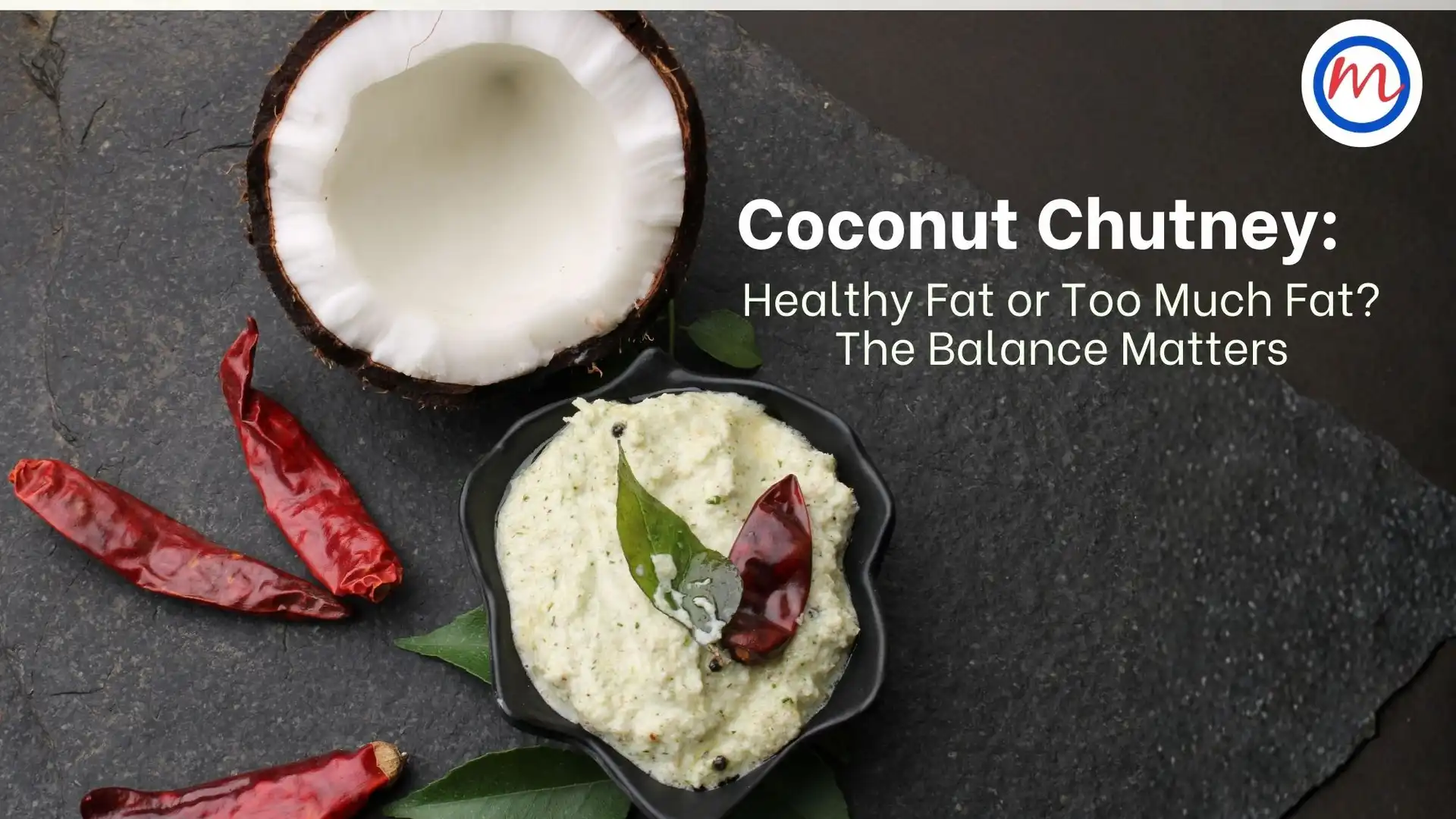
Coconut Chutney: Healthy Fat or Too Much Fat? The Balance Matters
Thengai chutney is the pride of South Indian breakfasts. Creamy, coconut-rich, fragrant, and perfect with idly, dosa, pongal, upma—almost everything. Coconut is a natural ingredient, so most people assume this chutney is automatically healthy.
But is it?
The answer is: yes… but only when you respect the portion and preparation.
Let’s break it down.
Why Thengai Chutney Can Be Healthy
- Coconut has healthy fats
Coconut contains medium-chain fatty acids (MCFAs) which the body digests faster than regular fats. These provide quick energy and can support metabolism.
- Good source of fibre
Grated coconut contains dietary fibre that supports digestion and delayed hunger.
- Micronutrients matter
It offers potassium, manganese, and antioxidants—nutrients many breakfast dishes usually lack.
So far, so good.
But the real problem starts with how chutney is made today.
Where Thengai Chutney Becomes Too Fat-Heavy
- Large quantities of coconut
Many households use 1 full cup of coconut for chutney meant for just 2–3 people.
That’s a lot of fat, even if it is “good” fat.
- Excess tempering
Oil, mustard, urad dal, red chilli, curry leaves—temperings are great for flavour but each spoon of oil adds 45 calories.
- Little or no lentils
Traditional chutney used a mix of coconut + roasted gram dal.
Modern versions often skip the dal and use only coconut—doubling the fat content.
- Thick consistency = more calories
The thicker the chutney, the more coconut you are eating per spoon.
How to Make Thengai Chutney Healthier
- Increase roasted gram dal (pottukadalai)
Use ½ cup coconut + ¼ cup dal. This cuts calories and adds protein. - Add vegetables
A tablespoon of grated carrot or a bit of coriander enhances fibre and reduces total fat per serving. - Use minimal oil for tempering
½ teaspoon oil is enough to season a bowl. - Use green chillies instead of dried red chillies
Gives flavour with no added oil requirement.
Healthy Thengai Chutney Recipe (Balanced Version)
Ingredients
- Fresh coconut – ½ cup
- Roasted gram dal – ¼ cup
- Green chillies – 1–2
- Ginger – small piece
- Salt – to taste
- Water – as needed
Tempering (optional):
- Oil – ½ teaspoon
- Mustard seeds, curry leaves
Method
- Grind coconut, roasted gram dal, green chillies and ginger with enough water.
- Season with mustard and curry leaves using minimal oil.
- Adjust thickness based on preference.
Approximate Nutritive Value (2 tablespoons)
- Calories: ~60 kcal
- Carbohydrates: 3 g
- Protein: 1 g
- Fat: 5 g
- Fibre: 1 g
To know more: https://drmohans.com/
Click to book an appointment: https://drmohansdiabetes.co.in/enroll/?campname=website
Is Coconut Chutney a Healthy Fat or Too Much Fat?
Coconut chutney is a beloved South Indian accompaniment, creamy, flavourful, and perfect with idli, dosa, pongal, or upma. But many individuals wonder whether this traditional side dish fits into a balanced eating plan. The truth is that coconut chutney offers both health benefits and nutrition concerns — the key lies in quantity and preparation. That’s why understanding coconut chutney healthy fat becomes important for your daily diet choices.
Coconut is naturally rich in medium-chain triglycerides (MCTs), a type of fat that is digested more rapidly than regular fats. These MCTs may provide quick energy and support metabolism. Coconut chutney also contains fibre, mild antioxidants, and micronutrients like manganese. When paired with steamed foods like idli, a small portion can make your meal more satisfying without causing a spike in blood glucose levels.
However, the concern arises when coconut is used in excess. Large portions of chutney significantly increase calorie intake because coconut is energy-dense. Many hotel-style chutneys also include excessive oil, coconut milk, or fried tempering, raising total fat levels further. For individuals with diabetes, obesity, or high cholesterol, this can add up quickly.
Balancing coconut chutney healthy fat means practising portion control — typically two tablespoons per meal. You can also lighten the recipe by adding more roasted gram dal, coriander, mint, or curd to reduce total fat content while keeping the taste intact.
In short, coconut chutney is not unhealthy — but the portion and preparation determine whether it supports or sabotages your health goals. Use moderate amounts and pair it with high-fibre, steamed dishes for a wholesome meal.