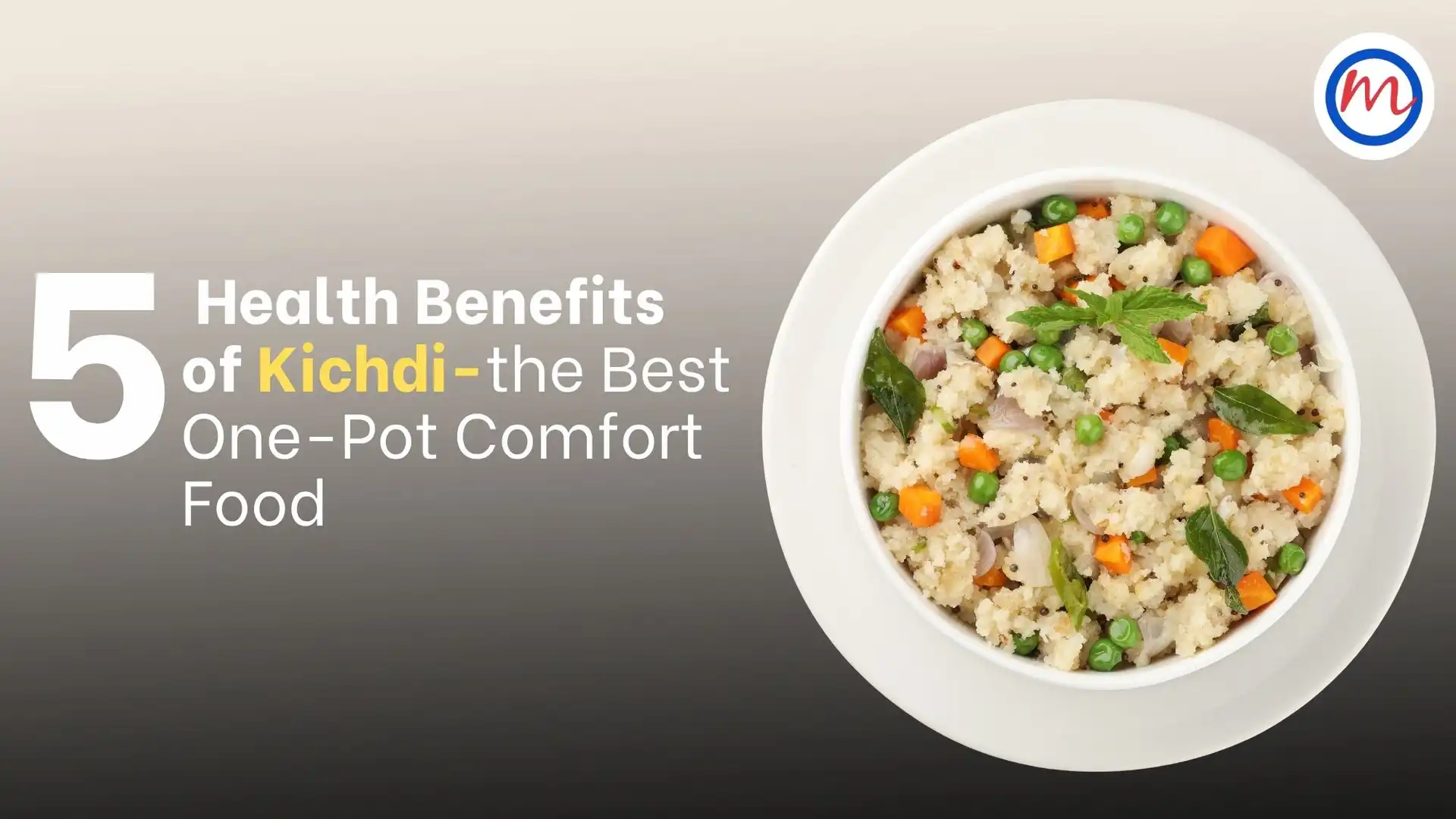
Kichdi is often seen as a simple home dish, but when you explore the kichdi health benefits, it becomes clear why this timeless recipe continues to be one of the most comforting and balanced meals in Indian cuisine. Made with rice, dal, vegetables, and mild spices, it brings together nourishment and digestion-friendly ingredients in a single pot. Kichdi can be the best one-pot comfort food.
Kichdi often gets an unfair reputation as a “sick-day food.” It’s what we eat when we’re down with fever, digestion issues, or just too tired to cook. But the truth is, kichdi is one of the most balanced and versatile meals in Indian cuisine — a complete one-pot dish that combines carbohydrates, protein, fibre and healthy fats in perfect proportion.
Traditionally made with rice and moong dal, kichdi is light on the stomach yet highly nourishing. It is cooked with minimal oil and tempered with cumin, ginger, and ghee — all of which aid digestion. But over the years, kichdi has been sidelined by flashier breakfast dishes like poha or paratha, when in fact, it can be transformed into a superfood meal with a few smart tweaks.
The key lies in increasing the dal proportion and adding vegetables like carrot, beans, spinach and peas. Using a mix of millets or brown rice instead of polished white rice boosts fibre and lowers the glycaemic index, making it perfect for people with diabetes or those watching their weight. A small drizzle of ghee before serving enhances flavour while improving the absorption of fat-soluble vitamins.
Kichdi may look humble, but it is a nutritionist’s dream — easy to digest, packed with protein, and naturally gluten-free. It is proof that comfort food can also be smart food. Next, we will discuss the healthy Idea to make the best one-pot meal comfort food.
Healthy Idea to make the Best One-Pot meal Comfort Food :
Use equal parts of moong dal and millet or brown rice and include colourful vegetables for a wholesome, high-protein, high-fibre version of kichdi.
Recipe: Protein-Rich Vegetable Kichdi
Ingredients:
- Moong dal – ½ cup
- Foxtail millet / brown rice – ½ cup
- Mixed vegetables – 1 cup (carrot, beans, peas)
- Cumin seeds – ½ tsp
- Ginger – 1 tsp (grated)
- Ghee – 2 tsp
- Turmeric – ¼ tsp
- Salt – to taste
- Water – 3 cups
Method:
- Wash and soak millet and dal for 30 minutes.
- In a cooker, heat the ghee and add cumin and ginger.
- Add vegetables, turmeric and salt.
- Add millet and dal; pour water and cook for 3 whistles.
- Serve hot with curd or raita.
Approximate Nutritive Value (per serving):
- Energy: 230 kcal
- Protein: 10 g
- Carbohydrates: 34 g
- Fat: 6 g
- Fibre: 4 g
This type of kichdi has more health benefits.
1. A Perfect Balance of Carbohydrates and Protein
Kichdi combines rice and dal in a way that gives you the right balance of nutrients and other health benefits. Rice provides easy-to-digest carbohydrates, while dal contributes essential proteins. Together, they form a complete protein profile, especially when you use moong dal. This is one reason parents often choose kichdi for children, elders, or anyone recovering from an illness. It is filling, nourishing, and gentle on the digestive system.
2. Light on the Stomach but High on Nutrition
One of the biggest reasons people turn to kichdi is its digestibility. Unlike many heavy meals, kichdi does not sit in the stomach for too long. The slow cooking of rice and dal softens the grains, making them easier to break down. Even during episodes of acidity, fever, or digestive discomfort, kichdi is recommended because it provides energy without irritating the digestive system. But being light does not mean it lacks nutrients. With the right proportion of dal and added vegetables, it can be a complete, nutrient-dense meal.
3. A Great Way to Add More Vegetables to the Diet
If you want to increase your daily vegetable intake, kichdi is an excellent choice to get a lot of health benefits. Vegetables like carrots, beans, peas, spinach, bottle gourd, pumpkin, and even tomatoes blend beautifully with the rice–dal base. They provide additional vitamins, minerals, and fibre to the meal. Since everything is cooked together, the nutrients lost during separate cooking methods are minimised. This makes vegetable kichdi even more beneficial for managing blood sugar levels, improving gut health, and keeping you full for longer.
4. Customisable for Every Lifestyle and Health Need
Kichdi can be adapted for almost any dietary requirement. Want a protein boost? Increase the dal, add soy granules, or mix in lentils like toor dal or masoor dal. Looking for a diabetes-friendly version? Use brown rice, millets, or quinoa instead of white rice. Prefer a richer version for growing children? Add a spoon of ghee. Even fitness enthusiasts include kichdi in their meals because it offers balanced nutrition without unnecessary fats or additives. From simple moong dal kichdi to vegetable millet kichdi, there are endless variations.
5. A Quick, One-Pot meal, No-Stress Meal for Busy Days
In fast-paced homes, kichdi is a lifesaver and provides health benefits. It requires minimal preparation, cooks quickly, and needs only one vessel. It is perfect for working individuals who want a nutritious meal without spending hours in the kitchen. Even for families, kichdi works as a comfort dinner because it gives satiety without heaviness. Paired with curd, pickle, or a simple salad, it becomes a complete meal that fits into any routine.
Learn More: https://drmohans.com/
To book an appointment click: https://drmohansdiabetes.co.in/enroll/?campname=website